


Pipe Fittings
Why choose GNEE Pipe Fittings?
Your Professional Pipe Fittings Supplier
Wide Product Range
Mainly engaged in carbon steel pipes and alloy steel pipes, liquid delivery pipes, structural pipes, hydraulic support pipes, boiler pipes and bearing pipes.
Certificate
The company has passed ISO9001 international quality management system certification and obtained 8 quality system certifications including provincial enterprise credit certificate, enterprise credit certificate, quality service certificate, and integrity management demonstration unit.
Production Line
10 hot-rolled steel pipe production lines
8 stainless steel pipe production lines
8 resistance welded pipe production lines
6 3PE anti-corrosion processing production lines
5 2PE anti-corrosion processing production lines
3 galvanizing processing production lines
Broad Market
The company's products are exported to more than 160 countries around the world, with a total of more than 800 global cooperative enterprises, including 15 shipbuilding companies, 143 engineering project companies, and 23 boiler machinery manufacturers.
-
![ASTM A234 WPB End Cap]() ASTM A234 WPB End CapASTM A234 WPB pipe caps are important components for pipe system connections, and their materials follow the ASTM A234 WPB standard.read more
ASTM A234 WPB End CapASTM A234 WPB pipe caps are important components for pipe system connections, and their materials follow the ASTM A234 WPB standard.read more -
![ASTM A105 Carbon Steel Plate Flange]() ASTM A105 Carbon Steel Plate FlangeASTM A105 carbon steel plate flange is a pipe connection device made of carbon steel and complies with ASTM A105/A105M standards. Suitable for general industrial applications.read more
ASTM A105 Carbon Steel Plate FlangeASTM A105 carbon steel plate flange is a pipe connection device made of carbon steel and complies with ASTM A105/A105M standards. Suitable for general industrial applications.read more -
![ASTM A182 Stainless Steel Flanges]() ASTM A182 Stainless Steel FlangesStainless steel flanges are critical components in piping systems, used to connect pipes, valves, pumps, and other equipment.read more
ASTM A182 Stainless Steel FlangesStainless steel flanges are critical components in piping systems, used to connect pipes, valves, pumps, and other equipment.read more -
![A234 Carbon Steel Equal TEE]() A234 Carbon Steel Equal TEEThe material of A234 carbon steel equal diameter tee is carbon steel, which complies with ASTM A234 standard. Its manufacturing process includes seamless and hot rolling. Since the connection...read more
A234 Carbon Steel Equal TEEThe material of A234 carbon steel equal diameter tee is carbon steel, which complies with ASTM A234 standard. Its manufacturing process includes seamless and hot rolling. Since the connection...read more -
![Stainless Steel Weldolet]() Stainless Steel WeldoletStainless steel weldolet is a reinforced pipe fitting used to connect the main pipe and branch pipe. It is mainly used to replace traditional connection methods such as reducing tees,...read more
Stainless Steel WeldoletStainless steel weldolet is a reinforced pipe fitting used to connect the main pipe and branch pipe. It is mainly used to replace traditional connection methods such as reducing tees,...read more -
![ASTM A234 WPB Elbow]() ASTM A234 WPB ElbowASTM A234 WPB elbow is mainly used in pipeline systems in petroleum, natural gas, chemical and other industries. This kind of elbow usually uses butt welding connection, with reliable connection...read more
ASTM A234 WPB ElbowASTM A234 WPB elbow is mainly used in pipeline systems in petroleum, natural gas, chemical and other industries. This kind of elbow usually uses butt welding connection, with reliable connection...read more -
![90 Degree Steel Pipe Elbow]() 90 Degree Steel Pipe ElbowThe 90-degree steel pipe elbow is a commonly used connection pipe fitting in plumbing installations. It is used to connect pipe corners and change the direction of the pipe.read more
90 Degree Steel Pipe ElbowThe 90-degree steel pipe elbow is a commonly used connection pipe fitting in plumbing installations. It is used to connect pipe corners and change the direction of the pipe.read more -
![ASTM A105 Threadolet]() ASTM A105 ThreadoletApplications:Petroleum, Chemical, Machinery, Boilerread more
ASTM A105 ThreadoletApplications:Petroleum, Chemical, Machinery, Boilerread more
Transport Package: Carton; Wooden Cases; Pallet
Standard: A105 -
![ASTM A403 WP 304L 90 Degree LR Elbow]() ASTM A403 WP 304L 90 Degree LR ElbowASTM A403 WP 304L 90 degree LR elbow can be divided into welding elbow, stamping elbow, push elbow, casting elbow, butt welding elbow and other types according to the production process to meet...read more
ASTM A403 WP 304L 90 Degree LR ElbowASTM A403 WP 304L 90 degree LR elbow can be divided into welding elbow, stamping elbow, push elbow, casting elbow, butt welding elbow and other types according to the production process to meet...read more -
![A234 WP22 Seamless Elbow]() A234 WP22 Seamless ElbowA234 WP22 seamless elbow is a pipe connection manufactured in accordance with ASTM A234 standards and is made of No. 22 carbon steel (also known as WP22).read more
A234 WP22 Seamless ElbowA234 WP22 seamless elbow is a pipe connection manufactured in accordance with ASTM A234 standards and is made of No. 22 carbon steel (also known as WP22).read more -
![ASTM A182 F91 Alloy Steel Flanges]() ASTM A182 F91 Alloy Steel FlangesF91 is a low-alloy steel known for its high strength and corrosion resistance, and it is commonly used in applications such as power generation, petrochemical, and chemical processing.read more
ASTM A182 F91 Alloy Steel FlangesF91 is a low-alloy steel known for its high strength and corrosion resistance, and it is commonly used in applications such as power generation, petrochemical, and chemical processing.read more -
![ASTM A182 F316 Stainless Steel Flanges]() ASTM A182 F316 Stainless Steel Flanges"316 stainless steel" is a kind of material, and "flange" is a common structural form of machinery. 316 stainless steel flange is a commonly used mechanical shaft connection part made of 316 material.read more
ASTM A182 F316 Stainless Steel Flanges"316 stainless steel" is a kind of material, and "flange" is a common structural form of machinery. 316 stainless steel flange is a commonly used mechanical shaft connection part made of 316 material.read more


pipe Fitting
pipe fitting is a weldable pipe fitting that allows for change of direction of flow, to branch off, reduce pipe size or attach auxiliary equipment.

Pipe flange
Flange is a ring-shaped structure used to connect equipment, pipelines and other components. It is usually used in petroleum, chemical industry, electric power and other fields. It is usually equipped with bolt holes, and tight connections between components are achieved through fasteners such as bolts and nuts, allowing complex mechanical systems to operate stably and efficiently.
Pipe tee
Tee, also known as pipe fitting tee or tee fitting, tee joint, etc., is a pipe fitting mainly used to change the direction of fluid and is used at branch pipes of main pipelines.

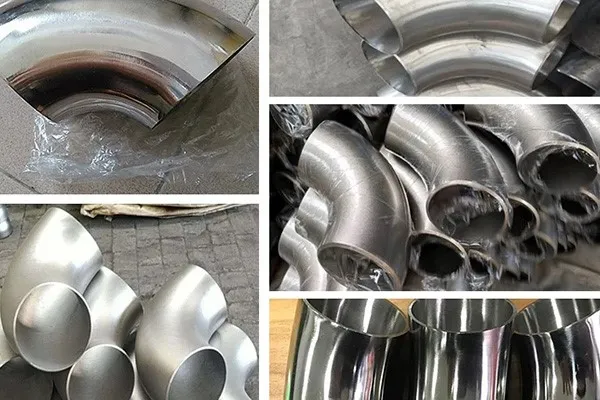
Pipe elbow
Elbow is a pipe fitting 123 used to change the direction of the pipeline in the pipeline system. Common angles include 45°, 90° and 180°. According to project needs, elbows with other abnormal angles such as 60° are also included.
Pipe cap
Pipe cap, also known as head, plug, head, pipe cover, bulkhead, etc., is a pipe fitting welded to the pipe end or installed on the external thread of the pipe end to cover the pipe. Its main function is to seal the pipeline, which is the same as the pipe plug.

Pipe flange
Keywords: Welding Neck Flange,Blind Flange,Socket Weld Flange.Lapped Joint Flange,Slip-on Flange,Plate Flange
Size: NPS from 1/2'' to 24'', CLASS from 150 to 2500
Standard: ANSI/ASME B 16.5, DIN, JIS, AWWA, API, ISO etc
Material: Carbon Steel --- ASTM A105,ASTM A350 LF1,LF2,LF3,A36,ASTM A234 WPB;Stainless Steel --- ASTM A403 F304/304L, 316/316L,316Ti,321,317L,310S;Alloy Steel --- ASTM A234 WP1/5/9/11/12/22/91
Ends: Square Ends/Plain Ends (Straight Cut, Saw Cut, Torch Cut), Beveled/Threaded Ends
Delivery : Within 30 Days and Depends on Your Order Quantity
Packing: Packed in Wood Cabins/Wood Tray
Usage: For Conveying Gas, Water and Oil Either in the Oil or Natural Gas Industriei
Pipe Tee
Keywords: Equal Tee, Unequal Tee, Cross Tee, Socket Tee, Short Tee, Forging Tee
Size: NPS from 1/2'' to 36'', DN from 15 to 900, WT: 2-80mm, SCH 40/80/XXS
Material & Standard: Carbon Steel --- ASTM A234 WPB/WPC, ANSI B 16.9, ASTM A105/A106/A53;Stainless Steel --- ASTM 403 304/304L,316/316L,316Ti,321,317L,310S;Alloy Steel --- ASTM A234 WP1/5/9/11/12/22/91
Ends : Square Ends/Plain Ends (straight cut, saw cut, torch cut), Beveled/Threaded Ends
Packing: Packed in Wood Cabins/ Wood Tray
Usage: Oil And Gas Transmissions;Petroleum And Oil Refining;Water Treatment Systems;Chemical Industries; Sanitary Tubing;Power Stations;Machines And Equipment;Heat Exchange
Pipe Elbow
Keywords: 45 Degree/90 Degree/180 Degree Elbow, Long Radius/Short Radius Elbow
Size: NPS: 1/2''~24''(Seamless), 24''~72''(Welded) ;DN: 15~1200, WT: 2~80mm, SCH 5~XXS
Bending Radius: R=1D~10D, R=15D, R=20D
Material & Standard: Carbon Steel --- ASME B16.9, ASTM A234 WPB Stainless Steel --- ASTM A403 304/304L/310/310S/316/316L/317L/321 Alloy Steel --- ASTM A234 WP1/5/9/11/12/22/91
Ends: Square Ends/Plain Ends (straight cut, saw cut, torch cut), Beveled/Threaded Ends
Delivery : Within 30 days and Depends on your order quantity
Packing: Packed in Wood Cabins/Wood Tray
Usage: For Conveying Gas, Water and Oil Either in the Oil or Natural Gas Industries
Pipe Cap
Keywords: Pipe End Cap, Pipe Steel Cap, Standard Steel Pipe Cap, Strong Steel Pipe Cap
Size: NPS from 1/2'' to 48'', DN from 12 to 1200,WT: 2-80mm, SCH 40/80/XXS
Material: Carbon Steel --- ASTM A234 WPB ANSI B 16.9, DIN 2606 N-5 ST.37.0;Stainless Steel --- ASTM 403 304/304L, 316/316L,316Ti,321,317L,310S;Alloy Steel --- ASTM A234 WP 1/5/9/11/12/22/91Bend Radius: 2.5D/3D/4D/5D/6D/7D/8D/9D/10D
Delivery: BKS, NBK,BK ,BKW, GBK(+A), NBK(+N), BK(+C)
Packing: Packed in Wood Cabins/ Wood Tray
Application: Petroleum, Electricity, Chemicals, Natural Gas, Construction, Shipbuilding And Other Fields Because Of Its High Pressure, High Temperature, Etc .


Pipe fittings use
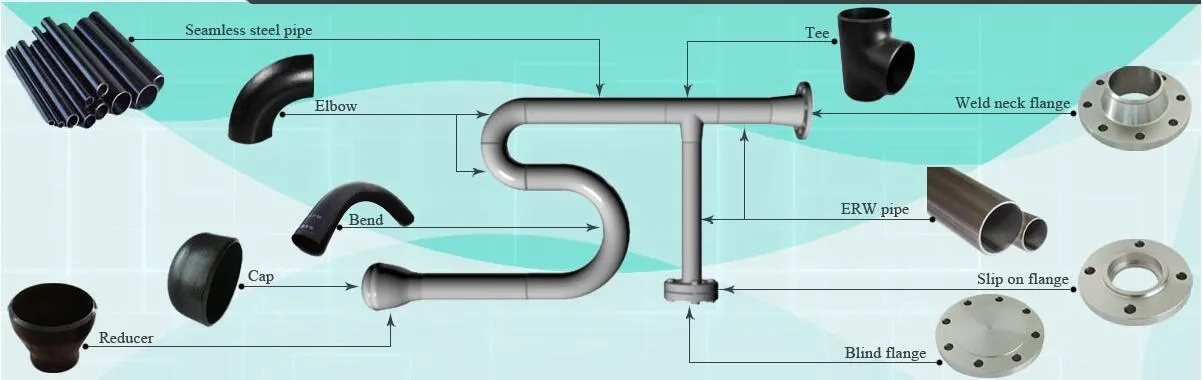
Usage
Fittings are components that are used to connect, join, or adapt different parts of a system, such as pipes, tubes, or hoses. They serve multiple purposes, including:
Connection: Fittings are used to connect sections of pipes, tubes, or hoses, ensuring a secure and leak-free joint.
Directional Changes: They allow for changes in the direction of fluid or gas flow within a system, such as elbows or bends.
Size Adaptation: Fittings can adapt pipes or tubes of different sizes, ensuring compatibility.
Branching: They enable branching or splitting of fluid or gas flow into multiple directions, like tees or crosses.
Valve and Control: Some fittings incorporate valves or controls to regulate or stop the flow as needed.
Pressure Control: Fittings may include pressure-relief valves or regulators to control fluid or gas pressure.
System Maintenance: Fittings with inspection ports or couplings facilitate system maintenance and testing.
Connection to Equipment: Fittings allow pipes or hoses to connect to various equipment or appliances.
Our factory
GNEE has 14 steel production lines, 10 processing equipment for processing, bending, painting, heat treatment, cutting, drilling, beveling, tempering, and surface treatment. It has complete testing equipment and strong technical force. The annual production capacity is more than 60,000 tons. The company has passed ISO9001 international quality management system certification and obtained 8 quality system certifications including provincial enterprise credit certificate, enterprise credit certificate, quality service certificate, and integrity management demonstration uni


Gnee Packaging and shipping
First, before packaging pipe fittings, you should ensure that the surface of the pipe or pipe fitting is clean so that the packaging material can effectively adhere to it.
The selection of packaging materials is key. They should have good oil resistance, water resistance and corrosion resistance, such as polyethylene film, sponge pads, etc., to ensure that the pipe fittings are not affected by damage, moisture and corrosion during transportation.
In addition, packaging methods will vary for different pipe fitting types and sizes. For example, bag packaging is mainly suitable for small pipe fittings, box packaging is suitable for small and medium-sized pipe fittings, and pallet packaging is suitable for large pipe fittings.
During the packaging process, special attention must be paid to moisture, shock and damage prevention. Moisture-proof measures include selecting packaging materials with good moisture-proof performance and strengthening packaging sealing; shock-proof measures include using foam plastics, air cushion films and other cushioning materials to protect pipe fittings from vibration; loss prevention measures require the selection of appropriate packaging materials and packaging methods to prevent the pipe fittings from being scratched or damaged during transportat


FAQ
Q: What are the five different pipe fittings?
Q: Why pipe fitting?
Q: How to maintain pipe fittings?
Q: How do I choose pipe fittings?
Check Temperature Level as well as Pressure ratings:
Make sure the materials are compatible:
Know when to schedule maintenance:
Q: What face shapes do flanges have?
Facing types determine both the gaskets needed to install the flange and characteristics related to the seal created.
Common face types include:
Flat Face (FF): As the name suggests, flat face flanges feature a flat, even surface combined with a full face gasket that contacts most of the flange surface.
Raised Face (RF): These flanges feature a small raised section around the bore with an inside bore circle gasket.
Ring Joint Face (RTJ): Used in high-pressure and high-temperature processes, this face type features a groove in which a metal gasket sits to maintain the seal.
Tongue and Groove (T&G): These flanges feature matching grooves and raised sections. This aids in installation as the design helps the flanges to self-align and provides a reservoir for gasket adhesive.
Male & Female (M&F): Similar to tongue and groove flanges, these flanges use a matching pair of grooves and raised sections to secure the gasket. However, unlike tongue and groove flanges, these retain the gasket on the female face, providing more accurate placement and increased gasket material options.
Many face types also offer one of two finishes: serrated or smooth.
Choosing between the options is important as they will determine the optimal gasket for a reliable seal.
In general, smooth faces work best with metallic gaskets while serrated faces help to create stronger seals with soft material gaskets.
Q: What are the characteristics of flanges?
The spot facing would ensure the seating of the fasteners true and square.
In order to obtain maximum strength, the grain flow is controlled.
Unrestricted flow is obtained by smooth and accurate bore.
Good welding is facilitated by machined bevel and land.
In order to ensure true alignments, all faces are machined within tolerances.
Q: What are the components of flanges?
The flange itself: This is the circular plate in which the holes and the connecting bolts are located.
Neck: This is the part that connects to the pipe, however, not all flanges have a neck.
Bolt diameter: This refers to the size of the holes into which the bolts are inserted.
The face: Depending on the model, flanges come with different face types, with the most common being the raised or RF face, the flat or FF face, and the ring-type joint or RTJ.
Q: Can you provide samples?
Q: Can we visit your factory?
Q: Can we visit your factory?
We're well-known as one of the leading pipe fittings manufacturers and suppliers in China. If you're going to buy discount pipe fittings in stock, welcome to get quotation and free sample from our factory. Also, customized service is available.