


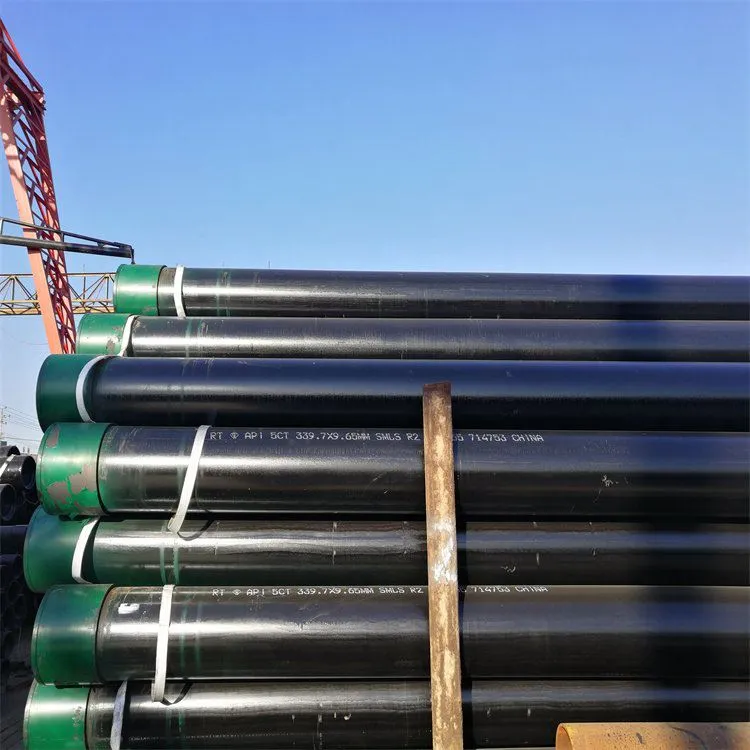
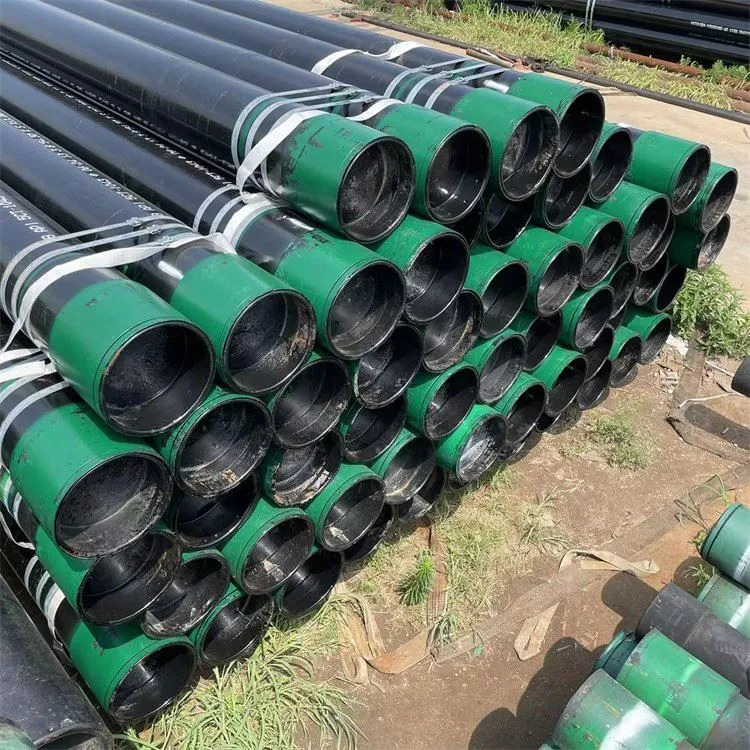
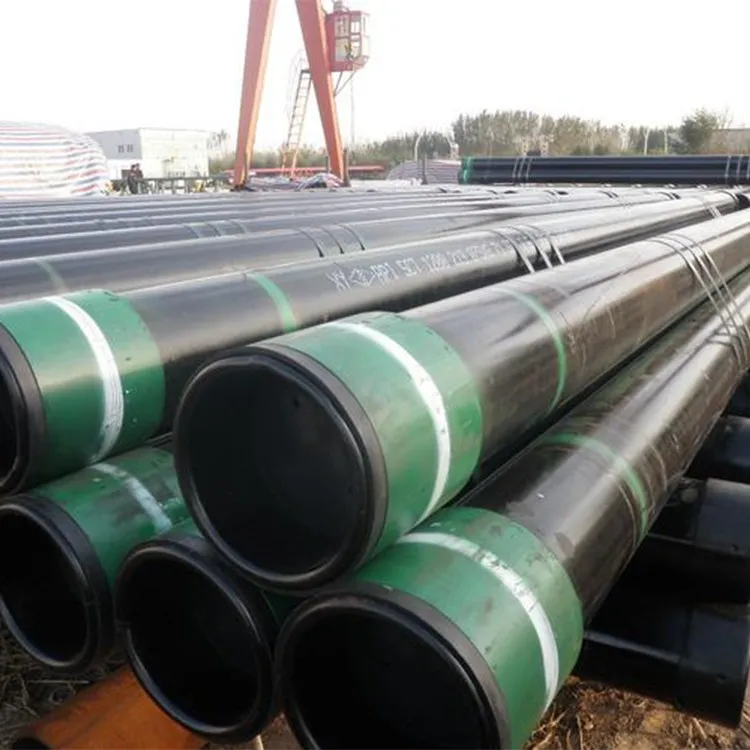
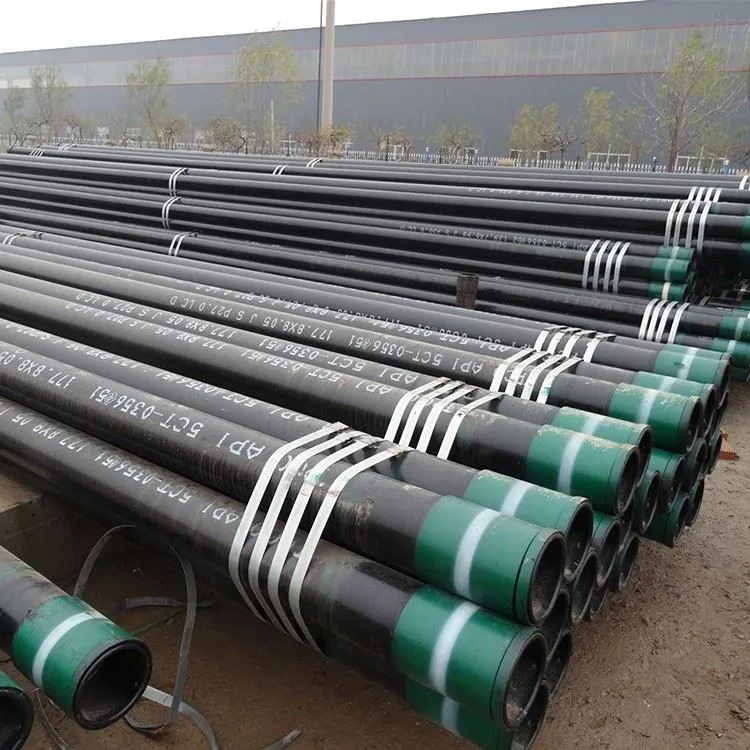
What is API 5CT K55 Casing and Tubing?
K55 is an API 5CT steel grade often used in the production of casing and tubing for oil and gas wells.
Performance: It has a yield strength of 55,000 to 80,000 psi.
Comparison: While it has the same yield strength range as J55, K55 has a higher minimum tensile strength (95 ksi vs 75 ksi for J55), making it more resistant to pulling forces.
Usage: It is generally used in environments without high H2S (sour service) requirements and where moderate strength is sufficient.
Full Range of K55 Tubing & Casing with BTC, LTC, and STC Connections. Simplify Your Supply Chain – Get a Bundled Quote.
API 5CT K55 Specification Table
| Item | Specification |
| Standard | API Spec 5CT (latest edition) |
| Grade | K55 |
| Product Specification Level | PSL1, PSL2, PSL3 |
| Type | Casing (Pipe to line the well) and Tubing (Pipe to transport oil/gas) |
| Delivery Condition | As-rolled, Normalized, or Quenched and Tempered |
K55 Identification API Color Code
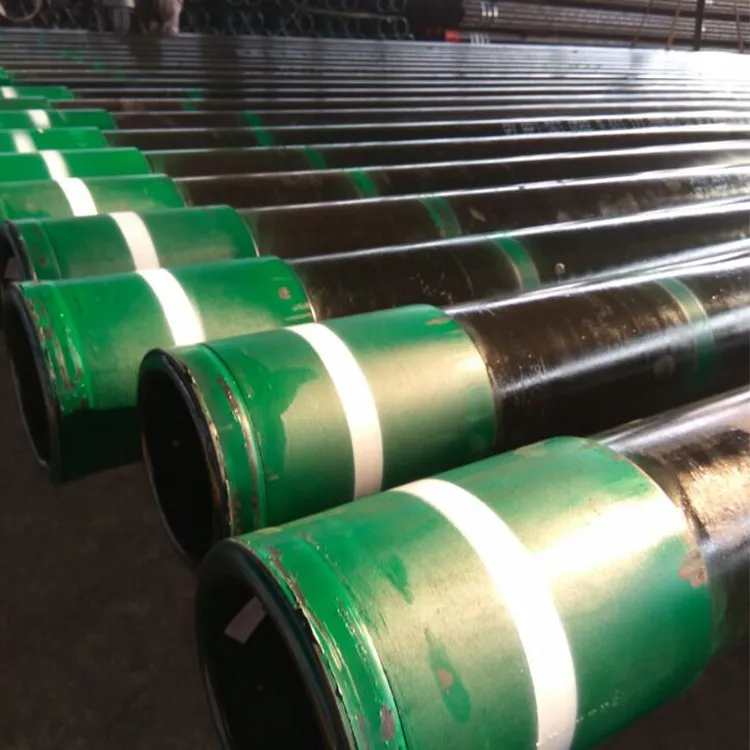
According to API 5CT, pipes must be color-coded to prevent mix-ups at the rig site.
| Grade | Color Band(s) on Pipe | Color on Coupling |
| K55 | Two Bright Green Bands | Entire coupling is Bright Green |
API 5CT K55 Chemical Composition Table
K55 belongs to Group 1 of the API 5CT steel grades. Compared to higher grades, API places fewer restrictions on the chemical elements for K55, focusing primarily on limiting Phosphorus (P) and Sulfur (S) to ensure basic steel quality.
| Grade | Type | Carbon (C) | Manganese (Mn) | Phosphorus (P) | Sulfur (S) | Silicon (Si) |
| K55 | - | Not Specified* | Not Specified* | ≤ 0.030% | ≤ 0.030% | Not Specified* |
*Note: Although API 5CT does not specify mandatory values for C, Mn, and Si for Grade K55, manufacturers must adjust the proportions of these elements to ensure the required mechanical properties are met. For PSL2 or PSL3 levels, more specific requirements may apply.
API 5CT K55 Mechanical Properties Table
The mechanical properties of K55 are very similar to J55. The key difference is the Tensile Strength: K55 requires a significantly higher minimum tensile strength than J55.
| Property | US Customary (psi) | Metric / SI (MPa) |
| Yield Strength (Min - Max) | 55,000 - 80,000 psi | 379 - 552 MPa |
| Tensile Strength (Minimum) | 95,000 psi | 655 MPa |
| Hardness Limit | No Requirement | No Requirement |
| Elongation | Based on API Formula* | Based on API Formula* |
*Note: The minimum elongation depends on the cross-sectional area of the specimen and the tensile strength, typically ranging between 15% and 25%.
Connections of API 5CT K55 Casing and Tubing
| Pipe Type | Common Connection Types |
| Casing | STC (Short Thread), LTC (Long Thread), BTC (Buttress Thread), Premium Connections |
| Tubing | EUE (External Upset End), NUE (Non-Upset End), Premium Connections |
Size Table: API 5CT K55 Casing (Common Sizes)
| Nominal Size (in) | OD (mm) | Wall Thickness (mm) | Weight (lb/ft) |
| 4-1/2 | 114.30 | 5.21 - 8.56 | 9.50 - 15.10 |
| 5-1/2 | 139.70 | 6.22 - 10.54 | 14.00 - 23.00 |
| 7 | 177.80 | 5.87 - 12.65 | 17.00 - 35.00 |
| 9-5/8 | 244.48 | 7.92 - 13.84 | 32.30 - 53.50 |
| 13-3/8 | 339.72 | 8.38 - 13.06 | 48.00 - 72.00 |
Size Table: API 5CT K55 Tubing (Common Sizes)
| Nominal Size (in) | OD (mm) | Wall Thickness (mm) | Weight (lb/ft) |
| 2-3/8 | 60.32 | 4.83 | 4.60 |
| 2-7/8 | 73.02 | 5.51 | 6.40 |
| 3-1/2 | 88.90 | 6.45 | 9.20 |
| 4-1/2 | 114.30 | 6.88 | 12.60 |
Dimensions and Tolerances
| Parameter | Tolerance |
| Outside Diameter (OD) | Pipe Size < 4-1/2": ±0.031"; ≥ 4-1/2": -0.5% to +1.0% |
| Wall Thickness | -12.5% (No upper limit specified by API) |
| Weight | -3.5% to +6.5% (Single joint) |
| Straightness | < 0.2% of total length |
K55 Casing and Tubing Pipe Application
Surface Casing: Protects groundwater and supports the wellhead.
Intermediate Casing: Used in medium-depth wells to isolate different pressure zones.
Production Tubing: Used to transport oil and gas from the reservoir to the surface.
Onshore Wells: Widely used in shallow to medium-depth onshore oil and gas exploration.
K55 Casing and Tubing Manufacturing Types
Seamless (SML): Hot rolled from solid billets. Highly recommended for high-pressure applications.
Electric Resistance Welded (ERW): Formed from steel strips and welded longitudinally. Often more cost-effective for K55.
Reference Inspection for K55 Casing and Tubing
To ensure safety and quality, the following inspections are performed:
Visual Inspection: Surface defects, threads, and markings.
Dimension Check: OD, Wall Thickness, Length, and Straightness.
Drift Test: Ensuring a standard mandrel can pass through the pipe.
Hydrostatic Test: Pressure testing to ensure leak-proof performance.
NDT (Non-Destructive Testing): Ultrasonic (UT), Magnetic Particle (MPI), or Eddy Current.
Mechanical Testing: Tensile and Flattening tests.

API 5CT K55 Casing and Tubing Factory

FAQ
What is the difference between K55 and J55?
The main difference between K55 and J55 is their minimum tensile strength. While they share the same yield strength, K55 is stronger and more resistant to pulling forces.
Here are the 3 key differences:
Tensile Strength (The primary difference):
J55: Minimum 75,000 psi (517 MPa).
K55: Minimum 95,000 psi (655 MPa). K55 is significantly stronger.
Color Coding:
J55: Identified by one bright green band.
K55: Identified by two bright green bands.
Yield Strength:
Both: Have the same yield strength range of 55,000 to 80,000 psi.
Is K55 carbon steel?
Yes, K55 is carbon steel.
Specifically, it is a low-to-medium carbon steel used for general-purpose oilfield operations.
Hot Tags: api 5ct k55 casing tubing, China api 5ct k55 casing tubing manufacturers, suppliers, factory


