


API 5L X70 PSL1 and PSL2 line pipes are high-strength pipeline steel pipes that comply with the American Petroleum Institute (API) 5L standard, with a minimum yield strength of 485 MPa (approximately 70,300 psi). They are widely used in the long-distance, high-pressure transportation of oil, natural gas and other energy resources.
The main differences between these two types of pipes lie in their quality control levels and applicable operating conditions:
PSL1 (Product Specification Level 1)
As a basic quality grade, PSL1 is suitable for most conventional oil and gas transportation scenarios. It has relatively relaxed requirements for chemical composition, impact toughness and non-destructive testing, and features lower costs, making it ideal for use in non-severe onshore environments.
PSL2 (Product Specification Level 2)
As a more stringent high-grade standard, PSL2 is designed for harsh operating environments such as high-pressure, low-temperature, offshore or hydrogen sulfide (H₂S)-containing acidic conditions. PSL2 has stricter requirements in the following aspects:
More precise chemical composition control: Especially with stricter limits on carbon equivalent (Ceq) to ensure excellent weldability.
Mandatory impact testing: For example, the longitudinal impact energy at 0°C must be ≥41 J, and the transverse impact energy must be ≥27 J.
100% non-destructive testing per pipe: Including ultrasonic testing and radiographic testing to ensure no defects in the welds and pipe body.
Higher requirements for welded joint performance: Welded joints must match the strength of the base material to enhance overall structural safety.
In addition, X70 grade steel pipes can be produced as seamless pipes or welded pipes (such as LSAW and SSAW), with a wide outer diameter range (up to 1240 mm) and wall thickness ranging from 1 mm to 200 mm, meeting diverse engineering needs.
Submit your requirements now to receive a customized quote for X70 PSL1/PSL2 line pipe within one hour-tailored to match your budget and timeline!
API 5L X70 Pipe Specifications
| Item | Specification |
|---|---|
| Standard | API SPEC 5L, GB/T 9711, ISO 3183 |
| Grade Definition | "X" stands for pipeline steel, "70" indicates a minimum yield strength of 70 ksi (approximately 485 MPa) |
| Product Specification Level | PSL1 (Basic Level), PSL2 (Strict Level) |
| Pipe Type | Seamless, Longitudinal Submerged Arc Welded (LSAW/ERW), Spiral Submerged Arc Welded (SSAW) |
| Outer Diameter Range | 8–1240 mm (approx. 0.3–48 inches) |
| Wall Thickness Range | 1–200 mm, supporting various schedules from SCH5s to XXS |
| Length | Fixed lengths: 5.8m, 6m, 11.8m, 12m; custom lengths available |
API 5L X70 pipeline for oil and gas Mechanical Properties (Min/Max Requirements)
Note: PSL2 has a mandatory maximum limit for yield strength to ensure weldability and safety.
| Item | PSL1 (Basic Level) | PSL2 (Strict Level) | Notes |
|---|---|---|---|
| Minimum Yield Strength (Rt₀.₅) | 485 MPa | 485 MPa | "X70" denotes a minimum yield strength of 70 ksi (~485 MPa) |
| Tensile Strength (Rm) | 570–760 MPa | 570–760 MPa | Ensures load-bearing capacity under high stress |
| Elongation (A) | ≥18% | ≥18% | Measures ductility and resistance to brittle fracture |
| Charpy V-notch Impact Energy |
|
|
PSL2 requires testing at lower temperatures to ensure low-temperature toughness |
| Drop Weight Tear Test (DWTT) | Not mandatory | ≥75% shear area at -20°C | Evaluates crack arrest capability, critical for high-pressure gas pipelines |
| Hardness Control | ≤28 HRC | ≤22 HRC (in sour environments) | Prevents hydrogen-induced cracking (HIC) and sulfide stress corrosion cracking (SSC) |
| Carbon Equivalent (Ceq) | ≤0.43% | ≤0.38% | Limits weldability and crack sensitivity; stricter in PSL2 |
API 5L X70 Carbon Steel Line Pipe Chemical Composition (Max % for X70)
Values may vary slightly based on manufacturing type (Welded vs. Seamless).
| Element | Content (wt%) | Notes |
|---|---|---|
| Carbon (C) | ≤ 0.18% | Low carbon design improves weldability and toughness; lower limits (≤0.12%) apply for PSL2 or sour service conditions |
| Silicon (Si) | 0.10 – 0.45% | Solid solution strengthening, enhances strength and corrosion resistance |
| Manganese (Mn) | 1.30 – 1.75% | Improves hardenability and deformation resistance, enhances low-temperature toughness |
| Phosphorus (P) | ≤ 0.020% | Strictly controlled impurity to reduce brittleness risk |
| Sulfur (S) | ≤ 0.010% | Reduces hot cracking tendency, improves hydrogen-induced cracking (HIC) resistance |
| Niobium (Nb) | 0.03 – 0.08% | Grain refinement, increases strength and low-temperature toughness |
| Vanadium (V) | 0.01 – 0.10% | Precipitation strengthening, improves overall mechanical properties |
| Titanium (Ti) | 0.010 – 0.06% | Fixes nitrogen, promotes microstructural uniformity |
| Aluminum (Alt) | ≥ 0.020% | Deoxidizer, improves steel cleanliness |
| Copper (Cu), Nickel (Ni), Chromium (Cr) | ≤ 0.35% each | Optional additions to further enhance corrosion resistance and strength |
API 5L X70 Pipe Dimensions (Seamless & Welded)
| NPS (in) | OD (mm) | WT (mm) - SCH/STD/XS |
|---|---|---|
| 1/2 | 21.3 | 2.77 (SCH 40), 3.73 (XS) |
| 3/4 | 26.7 | 2.87 (SCH 40), 3.91 (XS) |
| 1 | 33.4 | 3.38 (SCH 40), 4.55 (XS) |
| 1-1/4 | 42.2 | 3.56 (SCH 40), 4.85 (XS) |
| 1-1/2 | 48.3 | 3.68 (SCH 40), 5.08 (XS) |
| 2 | 60.3 | 3.91 (SCH 40), 5.54 (XS) |
| 2-1/2 | 73.0 | 5.16 (SCH 40), 7.01 (XS) |
| 3 | 88.9 | 5.49 (SCH 40), 7.62 (XS) |
| 4 | 114.3 | 6.02 (SCH 40), 8.56 (XS) |
| 6 | 168.3 | 7.11 (SCH 40), 9.53 (XS), 12.70 (XXS) |
| 8 | 219.1 | 8.18 (SCH 40), 10.97 (XS), 14.30 (XXS) |
| 10 | 273.1 | 9.27 (SCH 40), 12.70 (XS), 16.46 (XXS) |
| 12 | 323.9 | 9.53 (SCH 40), 12.70 (XS), 17.48 (XXS) |
| 14 | 355.6 | 9.53 (SCH 30), 12.70 (SCH 40) |
| 16 | 406.4 | 9.53 (SCH 30), 12.70 (SCH 40) |
| 18 | 457.2 | 9.53 (SCH 30), 12.70 (SCH 40) |
| 20 | 508.0 | 9.53 (SCH 30), 12.70 (SCH 40) |
| 24 | 609.6 | 9.53 (SCH 30), 12.70 (SCH 40), 15.88 (SCH 60) |
| 30 | 762.0 | 12.70, 15.88, 19.05 |
| 36 | 914.4 | 12.70, 15.88, 19.05, 22.23 |
| 42 | 1066.8 | 12.70, 15.88, 19.05, 25.40 |
| 48 | 1219.2 | 12.70, 15.88, 19.05, 25.40, 30.00 |
Corrosion Protection
The coating system should be selected based on the service environment. Typical coating systems include:
| Coating | Standard | Application |
|---|---|---|
| 3LPE (three-layer polyethylene) | ISO 21809-1 | Standard for onshore and shallow-water offshore. Good combination of mechanical protection, low cost, and cathodic protection compatibility. Typically designed for long-term service when properly coated and maintained. |
| 3LPP (three-layer polypropylene) | ISO 21809-1 | Higher-temperature version of 3LPE. Use when operating temperature exceeds ~80°C or for deepwater where the coating sees elevated temperatures during the service life from the hot produced fluid. |
| FBE (fusion-bonded epoxy) | CSA Z245.20 / ISO 21809-2 | Single or dual-layer. Preferred in acidic soil conditions and where excellent adhesion is needed for tight-radius bends. Thinner than 3LPE, so more care is required during transport. |
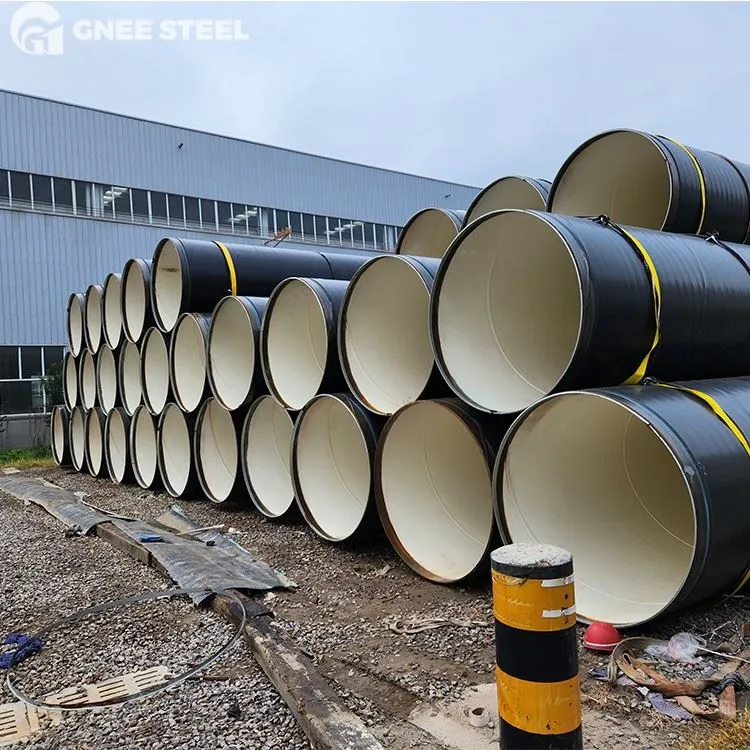
| Internal epoxy lining | API 5L2 / project spec | Flow-efficiency coating. Reduces pipe wall friction factor and protects against internal corrosion from wet gas or multiphase flow. Common in gas transmission lines where flow assurance matters. |
Pipe ends are typically prepared to ASME B16.25, 30° ± 2° bevel with a 1.6 mm root face. Coating shops will mask the bevel before applying external coating to keep the weld prep clean.
Typical engineering applications
| Application | Recommended Type | Typical Size Range | Why X70 Here |
|---|---|---|---|
| Onshore gas transmission trunk line | LSAW PSL2 (X70M) | 24–48 in. OD, 12–20 mm WT | High design pressure (8–14 MPa), long distances - thinner wall reduces steel tonnage and project cost |
| Offshore export pipeline (shallow to medium water) | LSAW PSL2 (X70M) | 16–36 in. OD, 15–25 mm WT | Lay vessel tension capacity limits wall thickness - X70 keeps weight down while meeting pressure rating |
| Deepwater riser (> 500 m) | Seamless PSL2 (X70Q) | 6–12 in. OD, 15–30 mm WT | External hydrostatic collapse governs wall thickness; seamless avoids a weld line in the high-fatigue riser touch-down zone |
| Sour gas gathering line | LSAW or SSAW PSL2 + HIC/SSC tested | 12–36 in. OD, 12–25 mm WT | H₂S resistance via ultra-low S, Ca-treated steel with mandatory HIC/SSC qualification |
| Arctic / cold-region pipeline | LSAW PSL2 (X70M) + low-temp CVN | 20–48 in. OD, 12–20 mm WT | CVN at −45°C or −60°C, DWTT at matching temperature; TMCP microalloy design avoids ductile-to-brittle transition |
| High-pressure water injection (oilfield) | ERW PSL1 (X70 or X65) | 2–8 in. OD, SCH 40–80 | Cost-driven; water injection does not require the full PSL2 overhead |
| Compressor station piping | Seamless PSL2 (X70Q), heavy wall | 6–16 in. OD, SCH 80–160 | Cyclic pressure loading + vibration demands seamless, thick wall for fatigue life |
Need a quick factory quote? Submit your inquiry → Get reply in 24H
Mandatory Testing - What the Mill Has to Prove
1. Tests That Apply to Both PSL1 and PSL2
Chemical analysis: Heat analysis on every heat. Product analysis on two tubes per lot.
Tensile test: Pipe body - yield, tensile, and elongation. One per lot of 200 tubes.
Hydrostatic test: Every single tube, 100%. Test pressure = 1.25 × SMYS × (2t / D), held for minimum 5 seconds for pipe OD ≤ 18 in. No leakage is permitted.
Dimensional check: OD, wall thickness, length, straightness. Every tube.
Visual inspection: Inside and outside surface. No cracks, laps, slivers, or injurious imperfections.
2. Extra Tests That PSL2 Adds
Charpy V-Notch (CVN) impact test: Pipe body and weld seam/HAZ. Test temperature and minimum absorbed energy set by the purchase order. Typical specs call for ≥ 40 J average at −20°C with no single specimen below 30 J. For arctic service, requirements may be ≥ 60 J at −45°C.
Drop Weight Tear Test (DWTT): Required for pipe > 16 in. OD. Minimum 85% shear area (ductile fracture) at the specified test temperature - commonly −15°C for temperate-region lines, lower for cold climates. This test simulates running ductile fracture in a gas pipeline and is the primary fracture-arrest design input for the line pipe specification.
Hardness test: Two tubes per lot, typically ≤ 250 HV10 or ≤ 22 HRC for standard applications. For sour service, Annex H tightens this further.
Full-body ultrasonic testing (UT): 100% of the pipe body for seamless; 100% of the weld seam for welded pipe, in accordance with API 5L requirements. Defects deeper than 5% of wall thickness or longer than 50 mm trigger rejection.
Full traceability: Every tube is uniquely identified and linked back to its heat number, mother coil/plate, test records, and NDE results.
3. Sour Service (H₂S) - Additional Testing
If the service environment falls within the scope of NACE MR0175 / ISO 15156, Annex H of API 5L (sour service) must be invoked. In addition to all standard PSL2 requirements:
HIC test (NACE TM0284, Solution A): Crack length ratio (CLR) ≤ 15%, crack thickness ratio (CTR) ≤ 5%, crack sensitivity ratio (CSR) ≤ 2%.
SSC test (NACE TM0177, Method A): Four-point bend or tensile specimen exposed to H₂S-saturated solution at specified stress level. No failure.
Hardness cap tightened: Typically 22 HRC (248 HV10) maximum in the base metal, weld, and HAZ.
X70 is not always the automatic choice for sour service - the higher strength can increase SSC susceptibility compared to X65 or X60. When the service environment falls within the scope of NACE MR0175 / ISO 15156 and the design requires X70 strength, the specific mill's sour-service production route must be qualified with full HIC and SSC testing. Standard-production X70 - even PSL2 - should not be assumed to be sour-service qualified without proper testing.
API 5L X70 test equipments
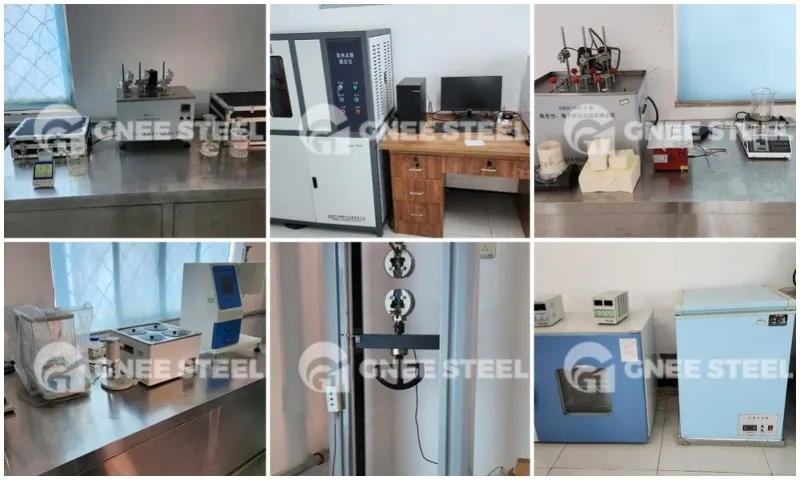
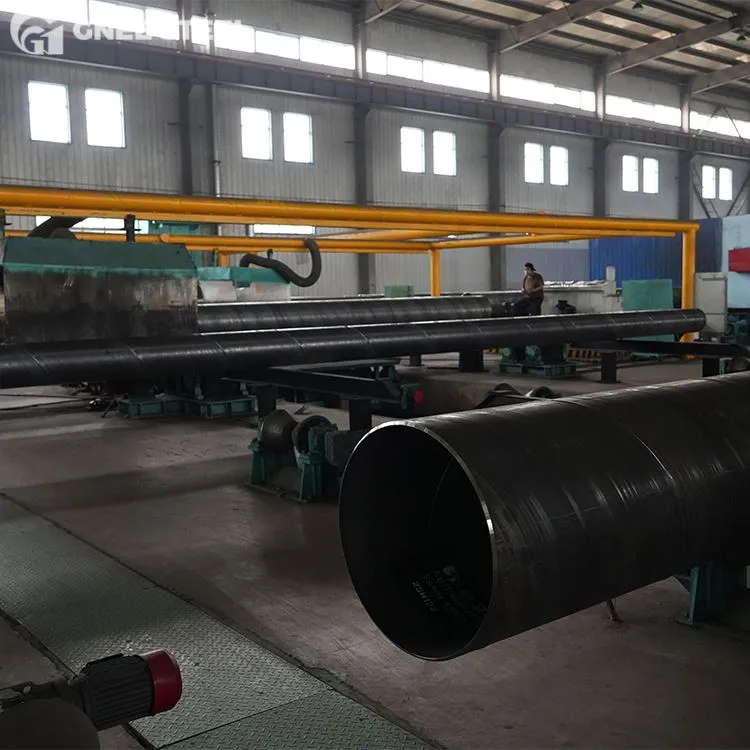
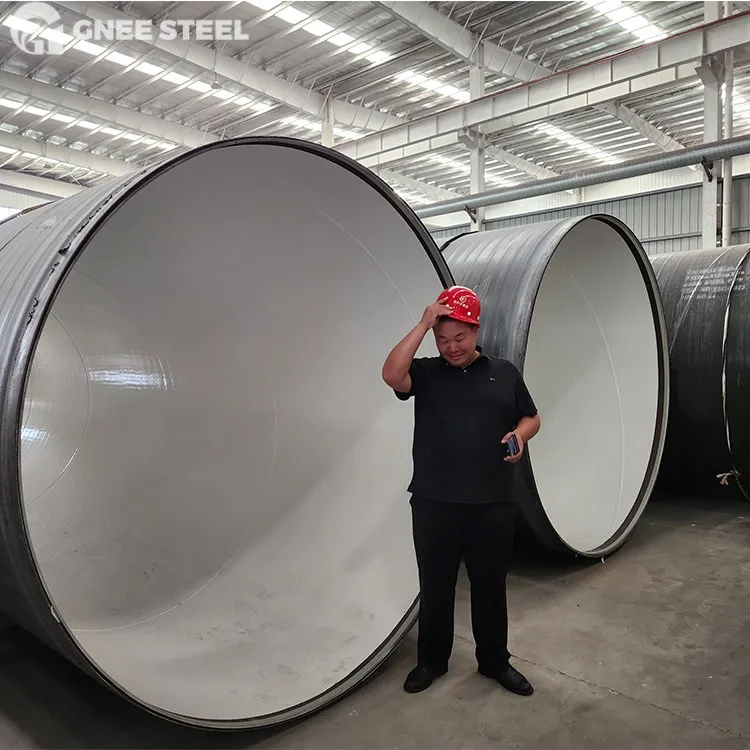
API 5L X70 Oil and Gas pipeline factory

Have special custom requirements? Contact us directly for tailored solution
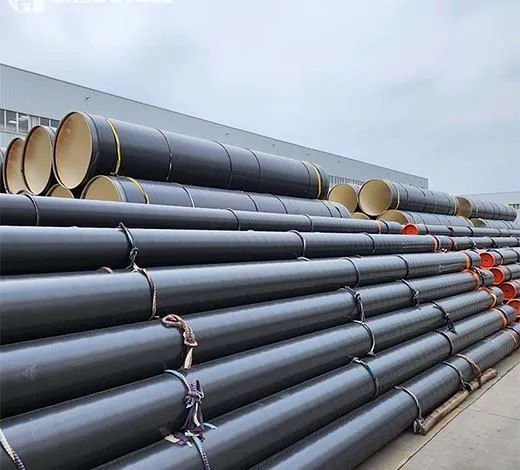
API 5L X70 Oil and gas pipe lines Packaging and Shipping

FAQ
Q1: What's the practical difference between PSL1 and PSL2 X70?
PSL1 is the basic specification - loose chemistry limits, no mandatory impact testing, no NDE requirements beyond hydrotest. It exists in the specification but is not typically used for X70 in real pipeline projects. PSL2 is what ships to job sites: tight carbon and sulfur limits, mandatory Charpy impact testing at low temperature, 100% ultrasonic or radiographic NDE, yield-to-tensile ratio capped at 0.93, and full heat-to-installation traceability. For high-pressure gas lines, deepwater risers, sour service - or any X70 application that matters - PSL2 is required. PSL1 X70 is limited to water injection lines and temporary construction piping where cost is the primary consideration.
Q2: What does the "X" in X70 stand for?
The "X" designates a high-strength grade under API 5L, and the number is the minimum yield strength in ksi (kilopounds per square inch) - so X70 = 70,000 psi minimum yield. This naming convention applies to all grades from X42 through X120. The ISO nomenclature uses "L" followed by the yield in MPa: X70 = L485. Both refer to the same grade.
Q3: Can I use X70 for sour service (wet H₂S)?
Yes, but only PSL2 with Annex H invoked, and only after the specific mill production route has been qualified with full HIC (NACE TM0284) and SSC (NACE TM0177) testing. Standard-production X70 - even PSL2 - is not automatically sour-service qualified. The higher strength of X70 makes SSC more of a concern than it is at X60 or X65, so qualification should not be assumed. When the service environment falls within the scope of NACE MR0175 / ISO 15156 and the design requires X70 strength, the mill qualification data should be obtained and reviewed by a materials engineer before the purchase order is issued.
Q4: What's the difference between X70 and X65?
The primary difference is in minimum yield strength: X65 has a minimum yield of 65 ksi (448 MPa); X70 is 70 ksi (485 MPa). The higher strength of X70 may reduce required wall thickness depending on the design code and operating conditions, which can reduce steel tonnage on long pipelines. The trade-off: X70 is somewhat more demanding to weld (tighter CE limits, more attention to preheat) and typically commands a price premium over X65. For pipeline design pressures above approximately 10 MPa (1,450 psi) in large diameters, the wall savings from X70 generally justify the grade upgrade. Below that threshold, X65 is often the more cost-effective choice.
Q5: Why do some X70 pipes have external fins?
Line pipe does not have external fins. Finned tubes are typically associated with heat exchanger products such as SA179 or SA192 economizer tubes, not API 5L line pipe. If finned "X70" is being offered, clarification should be requested - the supplier may be confused about the product, or referring to an integrated pipe-plus-coating system.
Q6: What does PSL2 X70 pipe typically cost?
X70 PSL2 LSAW in the 36–48 inch range, bare (uncoated), typically runs $800–1,100 per metric ton FOB China port, depending on order volume, wall thickness, and steel market conditions. Seamless X70Q heavy-wall (SCH 160) costs more - approximately $1,200–1,700/ton for small-bore sizes due to lower manufacturing yield and higher per-ton processing time. Add $80–150/ton for 3LPE coating. These are approximate figures - steel prices fluctuate, so a current quote for the specific dimensions and volume should always be obtained.
Q7: What's the maximum single-pipe length I can order in X70?
For LSAW, 12.2 meters (40 ft) is the standard double-random length, and 18.3 meters (60 ft) is available from mills with long plate-rolling capacity. For seamless, 12–13 meters is typical. For SSAW, the coil-fed process can theoretically produce pipes as long as transport permits - but the practical limit for truck or rail is usually 18 meters. Beyond 18 meters, special routing permits or barge transport are required. In practice, most pipeline contractors prefer 12-meter (40 ft) joints as the standard that balances fewer field welds against manageable handling weight.
Q8: Does X70 pipe need post-weld heat treatment (PWHT)?
PWHT requirements depend on the governing construction code, wall thickness, and service conditions. For typical wall thicknesses in cross-country pipeline service under ASME B31.8 or API 1104, PWHT is generally not required. The girth welds are thin enough and the carbon low enough (especially for X70M at ≤ 0.12% C) that the as-welded condition typically has acceptable hardness and toughness. For heavy-wall X70Q in plant piping under ASME B31.3 or in pressure-vessel connections under ASME Section VIII, PWHT may be triggered by code rules based on wall thickness and service conditions. The governing construction code should be consulted for the specific thickness threshold. This is not an X70-specific issue - the same rules apply to any carbon steel grade at the same wall thickness.
Q9: What international standards are equivalent to API 5L X70?
| Standard | Equivalent Grade | Country / Region |
|---|---|---|
| ISO 3183 | L485 | International (technically aligned with API 5L 46th Ed.) |
| GB/T 9711 | L485 / X70 | China |
| EN 10208-2 | L485MB (TMCP) / L485QB (Q&T) | European Union |
| CSA Z245.1 | Grade 483 (Cat II) | Canada |
| GOST R 52079 | К60 | Kazakhstan / CIS |
| DNVGL-ST-F101 | 485 (equivalent strength class) | Offshore / subsea (DNV classification) |
These are approximate equivalents. Dimensional tolerances, mandatory testing, and certification formats vary between standards. Substituting GB/T 9711 L485 for API 5L X70 without purchaser approval is a specification violation on any project governed by API 5L. The project specification should always be verified before accepting an alternate-standard material.
Q10: What are the most common failure modes for X70 pipelines?
The two primary failure modes are external corrosion (due to coating damage or cathodic protection system failure) and third-party mechanical damage (excavator strikes, anchor drags). For X70 specifically, a third concern is hydrogen-induced cracking in inadequately qualified sour-service pipe - where the combination of H₂S, moisture, and residual stress at the weld creates cracks that were not detected during construction NDE. Prevention measures include: (1) proper coating application and CP monitoring for external corrosion, (2) pipeline marker posts, one-call systems, and burial depth compliance for mechanical damage, (3) proper sour-service qualification per NACE MR0175 and API 5L Annex H before putting X70 in H₂S service. Most X70 failures are not material defects - they are operational or third-party issues.
Hot Tags: api 5l x70 psl1 and psl2 line pipe, China api 5l x70 psl1 and psl2 line pipe manufacturers, suppliers, factory, steel pipe api 5l seamless dimensions, seamless api 5l pipe for petroleum, api 5l seamless tubing stainless steel, seamless tubing api 5l grade, steel tubing api 5l seamless length, seamless api 5l pipe price


