


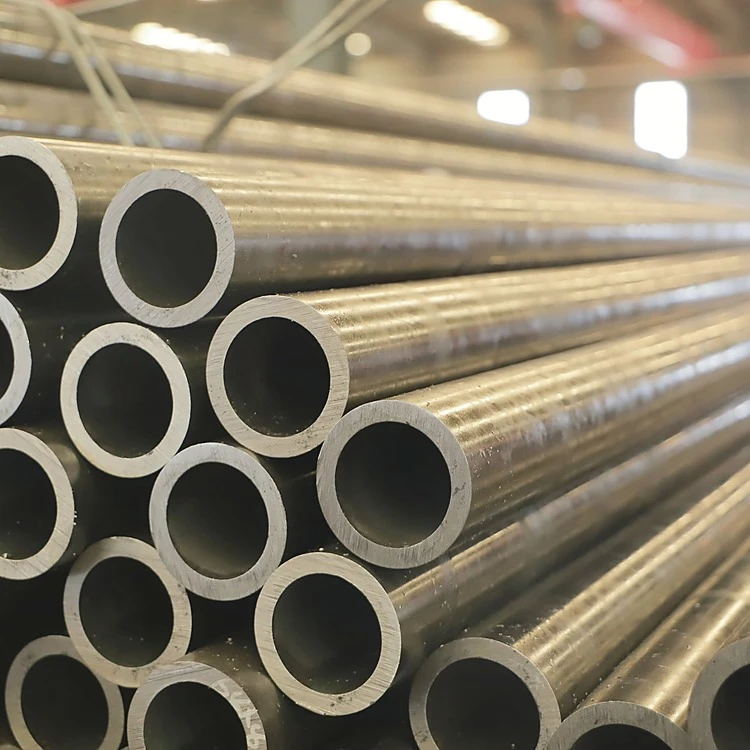
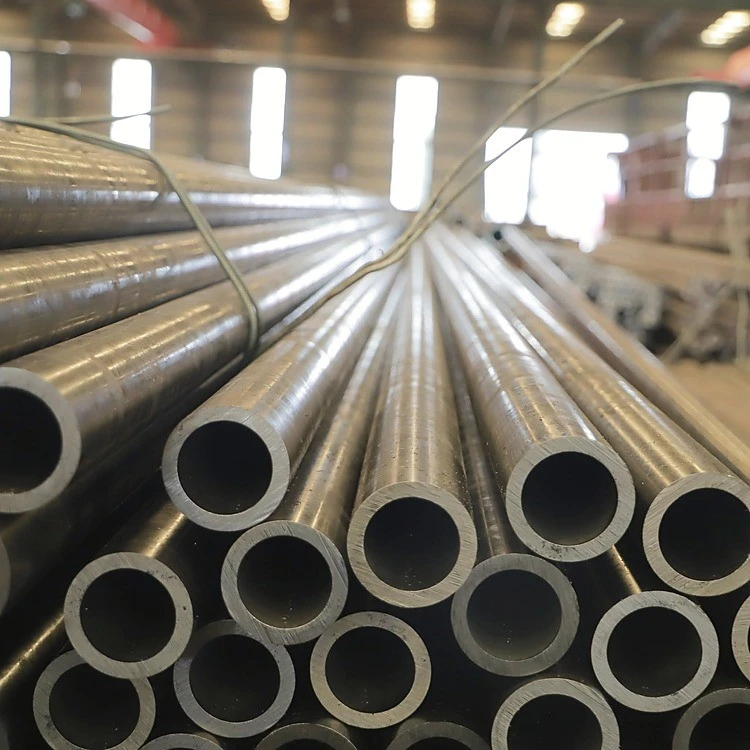
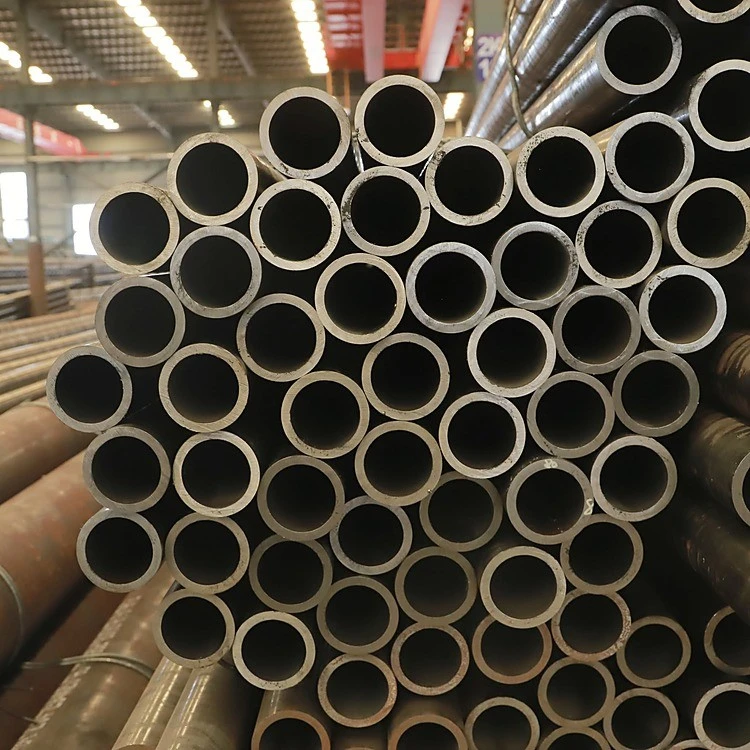
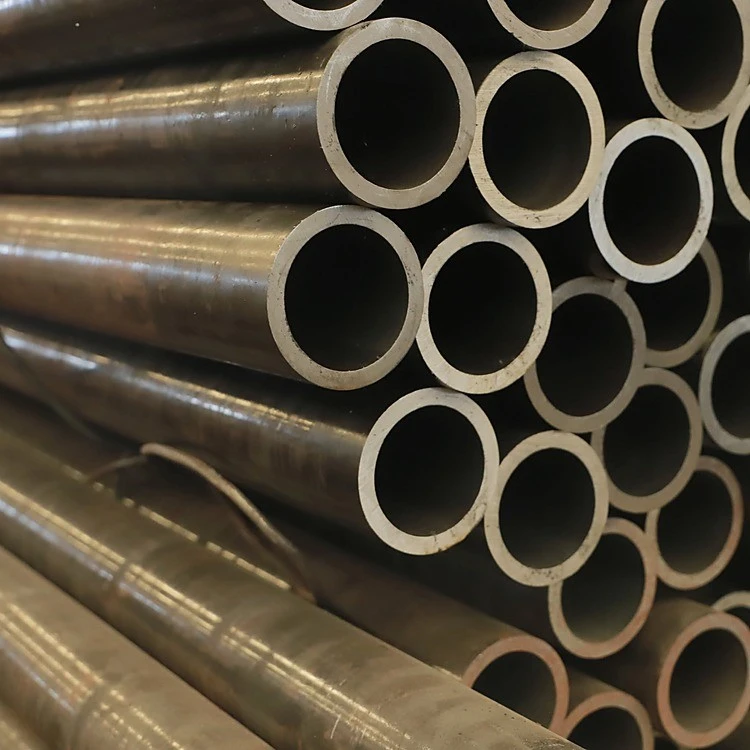
ASTM A106 Grade.B carbon steel seamless tube cold drawn is a seamless carbon steel tube bought for its dimensional accuracy and bore quality, not a large-diameter main line. An astm a106 gr b seamless pipe made by cold drawing starts as a hot-pierced shell and is finished cold, so the delivered tube has a closer OD tolerance, a smoother bore and better straightness. It is specified by the material standard, grade, nominal size, schedule and the cold-drawn delivery condition.
An astm a106 gr b smls call-out on a purchase order means the seamless route, and the abbreviation is used on many drawing notes and material requisitions. Cold-drawn tube is normally chosen in the smaller nominal sizes where precision pays, while the same Grade B steel in hot-finished form covers the larger diameters and heavier walls. The chemistry, strength and test requirements are identical for both finishing routes.
ASTM A106 Gr B Specification and Material
The astm a106 gr b specification is the standard for seamless carbon steel pipe for high-temperature service; SA-106 / SA-106M is the ASME Section II designation for the same material, with the M edition in metric units. The astm a106 gr b material is a killed, fine-grain carbon steel, and Grade B is the default call-out for refinery, boiler and process piping. An astm a106 gr b pdf data sheet can be supplied with the offer to bring the scope, chemistry, strength and test package into one document for the buyer's file.
| Item | Specification |
|---|---|
| Standard and title | ASTM A106/A106M, Seamless Carbon Steel Pipe for High-Temperature Service; ASME SA-106 equivalent |
| Grade | Grade B, UNS K03006 (Grades A and C available) |
| Finishing route | Cold drawn from hot-pierced shell; seamless only, no welded condition |
| Delivery condition | Cold drawn and heat treated after the final draw pass |
| Size basis | NPS and schedule to ASME B36.10M; cold drawn mainly in smaller NPS |
| Size range | Commonly NPS 1/8 to NPS 24 cold drawn, subject to mill capability |
| End condition | Plain square cut or bevelled for welding |
| Certificate | EN 10204 3.1 MTC; hydrostatic test standard, NDE as specified |
ASTM A106 Gr B Chemical Composition
The astm a106 gr b chemical composition limits are the heat-analysis mass percentages below, cross-checked against independent pipe references. The astm a106 gr b composition is the same for cold-drawn and hot-finished product - finishing changes shape and surface, not chemistry - and the purchased edition of the standard governs acceptance and check analysis.
| Element | Requirement | Role |
|---|---|---|
| Carbon (C) | max 0.30% | strength and weldability |
| Manganese (Mn) | 0.29 to 1.06% | strength and deoxidation |
| Phosphorus (P) | max 0.035% | impurity control |
| Sulfur (S) | max 0.035% | impurity control |
| Silicon (Si) | min 0.10% | deoxidation, high-temperature resistance |
| Chromium (Cr) | max 0.40% | residual element |
| Copper (Cu) | max 0.40% | residual element |
| Nickel (Ni) | max 0.40% | residual element |
| Molybdenum (Mo) | max 0.15% | residual element |
| Vanadium (V) | max 0.08% | residual element |
For each 0.01 percent that carbon is below the 0.30 percent maximum, manganese may rise by 0.06 percent above its listed maximum up to 1.65 percent unless the order states otherwise; the five residual elements together are limited to 1.00 percent. Confirm against the purchased edition.
ASTM A106 Gr B Mechanical Properties
The astm a106 gr b mechanical properties below are room-temperature minimums measured on the delivered condition. The astm a106 gr b yield strength minimum is 35 ksi (240 MPa) and tensile minimum is 60 ksi (415 MPa). The astm a106 gr b material properties depend on the final heat treatment: a cold-drawn tube that skips the post-draw heat treatment will not reliably meet these values. The full astm a106 gr b properties are drawn together here so the mechanical and chemical requirements can be read side by side.
| Property | Grade B requirement |
|---|---|
| Tensile strength | 60 ksi (415 MPa) minimum |
| Yield strength | 35 ksi (240 MPa) minimum |
| Elongation, longitudinal | 30% minimum in 2 in. (50 mm) |
| Elongation, transverse | 20% minimum in 2 in. (50 mm) |
| Hardness | Not specified in A106 unless required by the purchaser |
Allowable stress at service temperature is lower than the room-temperature minimum and is taken from the applicable design code, not from this table.
ASTM A106 Gr B Pipe Dimensions - SCH 40
The astm a106 gr b pipe dimensions follow nominal pipe size and schedule to ASME B36.10M. For astm a106 gr b sch 40 the wall grows with the nominal size rather than staying at a fixed thickness. The astm a106 gr b schedule 40 wall for NPS 6, for example, is 7.11 mm; for NPS 2 it is 3.91 mm. Cold drawing is mainly applied to the smaller sizes where its tolerance advantage matters.
| NPS | Outside diameter | Nominal wall (SCH 40) | Theoretical mass |
|---|---|---|---|
| NPS 1/2 | 21.3 mm | 2.77 mm | 1.27 kg/m |
| NPS 3/4 | 26.7 mm | 2.87 mm | 1.69 kg/m |
| NPS 1 | 33.4 mm | 3.38 mm | 2.50 kg/m |
| NPS 1-1/4 | 42.2 mm | 3.56 mm | 3.39 kg/m |
| NPS 1-1/2 | 48.3 mm | 3.68 mm | 4.05 kg/m |
| NPS 2 | 60.3 mm | 3.91 mm | 5.44 kg/m |
| NPS 2-1/2 | 73.0 mm | 5.16 mm | 8.63 kg/m |
| NPS 3 | 88.9 mm | 5.49 mm | 11.29 kg/m |
| NPS 4 | 114.3 mm | 6.02 mm | 16.07 kg/m |
| NPS 5 | 141.3 mm | 6.55 mm | 21.73 kg/m |
| NPS 6 | 168.3 mm | 7.11 mm | 28.26 kg/m |
| NPS 8 | 219.1 mm | 8.18 mm | 42.55 kg/m |
| NPS 10 | 273.0 mm | 9.27 mm | 60.63 kg/m |
| NPS 12 | 323.8 mm | 10.31 mm | 79.73 kg/m |
Mass is plain-end theoretical value; nominal wall is the schedule value and the A530 minus-12.5-percent minimum-wall rule applies to the delivered tube. Confirm against the purchased edition of ASME B36.10M.
Cold Drawn vs Hot Finished
Both routes produce seamless Grade B tube, but they are chosen for different work. The table compares the two so the buyer can specify the right finishing condition.
| Aspect | Cold drawn | Hot finished |
|---|---|---|
| Process | Hot shell drawn cold through die and over mandrel | Pierced and rolled at rolling temperature |
| Typical size | Smaller NPS, thin to medium wall | Large NPS and heavy wall |
| OD tolerance | Closer, commonly about ±0.10 to ±0.25 mm on small sizes | Standard A530 band by size |
| Bore finish | Smoother, lower friction, easier to clean | Mill scale, rougher surface |
| Straightness | Better as-drawn | Reasonably straight per the standard |
| Heat treatment | Mandatory after final draw | As rolled unless treatment is ordered |
| Cost | Higher per tonne in small sizes | Better value for large main piping |
Heat treatment is not optional on cold-drawn A106. The final cold pass work-hardens the steel; a subsequent heat treatment restores the ductility and the specified strength condition. We state the treatment applied on the certificate rather than leaving the condition ambiguous.
ASTM A106 Gr B Equivalent Grades
When a drawing names Grade B but the project follows EN, DIN or JIS, the astm a106 gr b equivalent question is about the closest substitute in the right temperature range. The table cross-references common designations; none is exactly identical, and substitution depends on design temperature and inspection rules.
| Standard | Grade | Yield / tensile (MPa) | Substitute note |
|---|---|---|---|
| EN 10216-2 | P265GH | 265 / - | Closest high-temperature seamless EN grade |
| EN 10216-1 | P265TR1 / P265TR2 | 265 / - | Room-temperature pressure purposes |
| DIN | St 45.8 / I | 265 / - | Legacy designation on old drawings |
| JIS G3456 | STPT370 | 215 / 370 | High-temperature use, conditional |
| JIS G3454 | STPG370 | 215 / 370 | Ambient pressure, not a like-for-like substitute |
| GB/T 8163 | 20# | 245 / 410 | Common economy substitute, ambient duty |
| API 5L | Gr.B | 245 / 415 | Line-pipe spec, different tests - not equivalent |
A106, A53 and A333 all carry a 240 MPa minimum yield and are often confused; the difference is service temperature and testing. Confirm the design temperature before any substitution.
ASTM A106 Gr B Temperature Limits
The astm a106 gr b temperature limits are set by the design code, not by the material specification itself. Under ASME B31.3, Grade B without supplementary impact testing is used from about -29 °C up to roughly 425 °C, with a recommended continuous ceiling near 400 °C because of graphitization and creep. The upper part of the range suits intermittent duty; below freezing A106 has no impact requirement and A333 Gr.6 applies. Above the carbon-steel range, alloy grades such as A335 P11 or P22 are chosen.
| Range | Guidance |
|---|---|
| Below 0 °C | A106 has no impact requirement - use A333 Gr.6 for low-temperature service |
| Ambient to about 400 °C | Normal continuous service range under the design code |
| About 400 to 425 °C | Upper band; intermittent or de-rated service, graphitization risk |
| Above about 425 °C | Consider alloy grades such as A335 P11 / P22 for main steam |
These are code-based guidance figures, not a warranty of service life. The allowable stress and the final limit come from the governing design code and the project specification.
Testing, Inspection and Documents
The test package is fixed at the enquiry stage because a certificate can only report what was actually performed.
| Item | Requirement |
|---|---|
| EN 10204 3.1 MTC | Inspection certificate with heat analysis and mechanical results, signed by an inspection representative independent of the manufacturing department |
| Hydrostatic test | Each length to the standard formula, proving pressure tightness |
| Nondestructive test (NDE) | UT, ET or electric test as specified, with method and acceptance stated |
| Tension and flattening | Tension test per heat, flattening for the sizes named in the order |
| Heat treatment record | Post-draw treatment condition recorded for the cold-drawn lot |
| Traceability | Heat number carried from billet through tube, certificate and packing list |
| Third-party inspection | SGS, BV or purchaser witness points fixed in the purchase order |
An astm a106 gr b pdf data sheet accompanies the offer so the specification, test scope and certificate type are visible in one file. An EN 10204 3.1 certificate is an inspection document, not a claim that every optional test was run; the order names which tests are mandatory and the certificate reports exactly what was done.
test and inspection
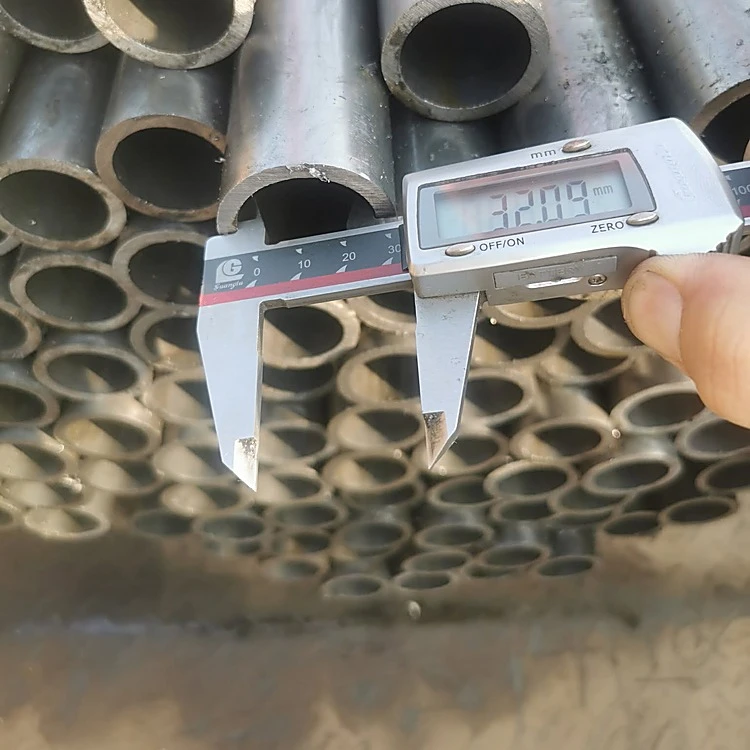
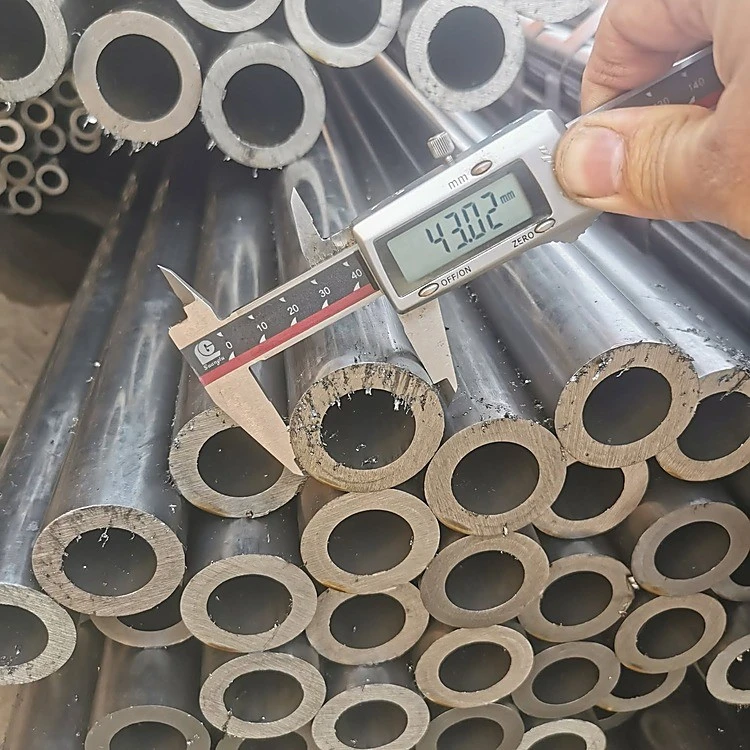
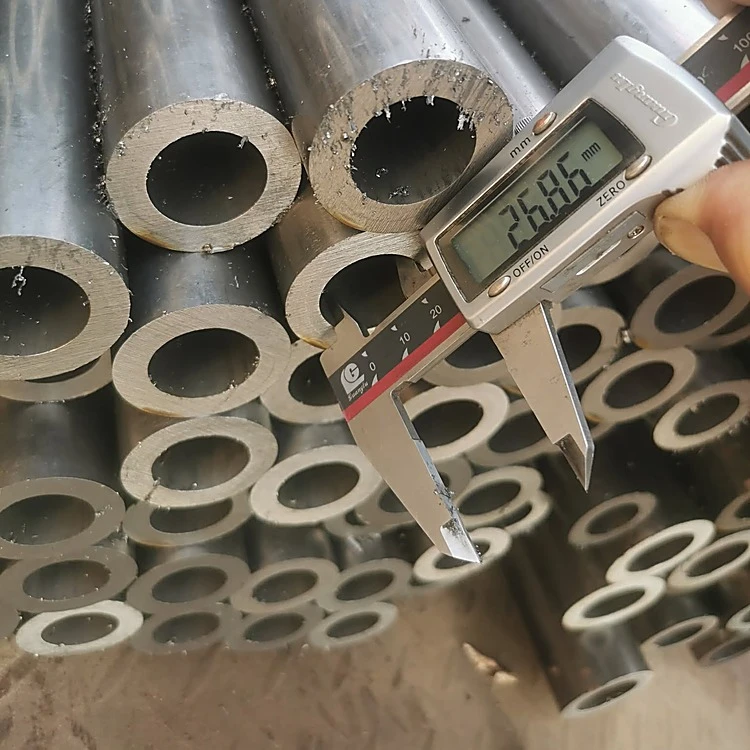
As a supplier of ASTM A106 Grade B cold-drawn seamless tube, we ask for the size and schedule list, the order quantity, the required delivery condition and the certificate and test set you need. We confirm the A106 GRB CS Smls Pipe form, state the cold-drawn tolerance and heat-treatment basis, and return an itemised offer covering tube, testing and packing. Tell us the bore finish and straightness you need and we will confirm what cold drawing can hold for your sizes.
Pelated Pages
A106 Seamless Carbon Steel Pipes For Gas Line And Industrial Use
ASTM A106 Grade C Seamless Heavy-wall Tube For A Recurring Machining Program
FAQ
What does cold drawn mean for ASTM A106 Grade B seamless tube?
Cold drawing is a finishing step applied after the seamless shell has been hot pierced and rolled. The cooled tube is pulled through a carbide die and over a plug or mandrel at room temperature, which slightly reduces the outside diameter and wall and elongates the tube. The result is a tighter dimensional tolerance, a smoother internal surface and better straightness than a hot-finished product. The steel is still ASTM A106 Grade B - cold drawing changes the shape and surface, not the grade - and the finished tube is heat treated after the last draw pass to restore the required condition.
Why choose cold drawn A106 Gr.B tube over hot finished pipe for a precision line?
Choose cold drawn when the job depends on dimensional accuracy and bore finish rather than on large diameter or heavy wall. Cold-drawn tube holds a closer OD tolerance, has a smoother inner surface that reduces flow friction and is easier to clean, and is straighter, so it suits instrumentation lines, heat-exchanger and condenser tubes, hydraulic and pneumatic lines, and close-tolerance fabrication. Hot-finished pipe remains the better value for large-diameter, thick-wall main piping where the wider tolerance band is acceptable. Both routes produce the same Grade B material and both are seamless.
What chemical composition limits apply to ASTM A106 Grade B?
The heat-analysis limits are carbon 0.30 percent maximum, manganese 0.29 to 1.06 percent, phosphorus and sulfur 0.035 percent maximum each, and silicon 0.10 percent minimum. Residuals are capped at chromium, copper and nickel 0.40 percent, molybdenum 0.15 percent and vanadium 0.08 percent. For each 0.01 percent that carbon is below the maximum, manganese may rise by 0.06 percent up to 1.65 percent unless the order says otherwise. These limits are the same for cold-drawn and hot-finished tube; the purchased edition of the standard governs acceptance.
What are the mechanical properties and minimum yield strength of A106 Gr.B?
Grade B has a minimum tensile strength of 60 ksi (415 MPa) and a minimum yield strength of 35 ksi (240 MPa), with 30 percent minimum elongation in 2 in. (50 mm) on a longitudinal specimen. Hardness is not mandated by A106 unless the purchaser specifies it. These minimums apply to the delivered condition, so a cold-drawn tube must be correctly heat treated after its final pass or it will not meet the strength requirement. The values are room-temperature minimums; allowable stress at service temperature is set by the design code.
Which standard is the closest ASTM A106 Gr.B equivalent in EN, DIN and JIS?
There is no identical equivalent, only closest matches that depend on the design temperature. For high-temperature seamless service the nearest EN grade is EN 10216-2 P265GH, and for room-temperature pressure duty EN 10216-1 P265TR1 or P265TR2; legacy German drawings may call DIN St 45.8. Under JIS, G3456 STPT370 is the high-temperature choice and G3454 STPG370 the ambient one, but both are lower strength and substitute only conditionally. GB/T 8163 20# is a common economy substitute for non-critical ambient service. API 5L Gr.B is not a true equivalent because it is a line-pipe specification with different test rules.
What are the temperature limits for ASTM A106 Gr.B tube in service?
A106 does not set its own maximum service temperature; the limit comes from the design code and the allowable-stress table. Under ASME B31.3, Grade B without supplementary Charpy impact testing is used roughly from -29 °C up to about 425 °C, with a lower recommended ceiling near 400 °C for long continuous service because of graphitization and creep in carbon steel. The higher part of the range is for intermittent duty. Below freezing A106 has no impact requirement, so A333 Grade 6 is the correct choice. For main steam above the carbon-steel range, alloy grades such as A335 P11 or P22 are selected.
What pipe dimensions and schedule 40 sizes are available for A106 Gr.B?
Dimensions follow nominal pipe size and schedule to ASME B36.10M, with A106 covering NPS 1/8 to NPS 48. Schedule 40 is the common general-purpose wall: NPS 1 is 33.4 mm OD by 3.38 mm wall, NPS 2 is 60.3 mm by 3.91 mm, NPS 4 is 114.3 mm by 6.02 mm and NPS 6 is 168.3 mm by 7.11 mm. Cold-drawn tube is most often supplied in the smaller nominal sizes where the tighter tolerance is valuable, while SCH 40 is available across the range from the hot-finished route. Other schedules from SCH 10 to XXS can be quoted.
Is there an ASTM A106 Gr.B PDF data sheet, and what does the specification cover?
A one-page ASTM A106 Gr.B PDF data sheet can be issued with the offer, summarising the scope, Grade B chemistry and strength, the size and schedule basis to ASME B36.10M, the cold-drawn delivery condition and the test and certificate package. The specification itself covers seamless carbon steel pipe for high-temperature service in Grades A, B and C; it defines chemistry, mechanical tests, hydrostatic or nondestructive testing, dimensions and marking, but it does not choose the wall schedule or the service temperature for a particular line. Those come from the piping code and the purchase order.
Hot Tags: astm a106 grade.b carbon steel seamless tube cold drawn, China astm a106 grade.b carbon steel seamless tube cold drawn manufacturers, suppliers, factory, ASTM A210 gr A1 seamless pipe, DIN 17175 10CrMo910 pipe, GB T8163 20 fluid seamless pipe, jis g3503 carbon steel pipe, jis g3552 carbon steel pipe, S275JOH EN 10219 Carbon round tube


