


API 5L X52 (ISO 3183 L360): Developed by the American Petroleum Institute. Its core design objective is long-distance, high-pressure oil and gas transportation. X52 represents its minimum yield strength of 52,000 psi (360 MPa).
ASTM A333 Grade 6: Developed by ASTM International. Its core selling point is low-temperature toughness. It is designed to maintain excellent impact resistance in extremely low temperature environments (down to -45°C or -50°F).
API 5L X52 vs. ASTM A333 Grade 6: 2026 Technical Comparison & Selection Guide.
Comparison Table: API 5L X52 (PSL2) vs. ASTM A333 Grade 6
| Comparison Dimension | API 5L X52 (PSL2) | ASTM A333 Grade 6 | Procurement & Engineering Insights |
| Standard System | API SPEC 5L (Specification for Line Pipe) | ASTM A333 (Seamless/Welded Pipe for Low-Temp Service) | Application: API focuses on long-distance transport; ASTM focuses on plant & process piping. |
| Min. Yield Strength | ≥ 360 MPa (52,200 psi) | ≥ 240 MPa (35,000 psi) | Pressure Rating: X52 is significantly stronger, allowing for thinner walls under high pressure. |
| Min. Tensile Strength | ≥ 460 MPa (66,700 psi) | ≥ 415 MPa (60,000 psi) | X52 offers higher structural integrity for high-pressure transmission. |
| Elongation | Approx. 21% - 25% (Spec-dependent) | ≥ 30% | Ductility: A333 Gr. 6 is more ductile, providing better resistance to sudden shocks. |
| Low-Temp Impact Test | Not mandatory for all (PSL2 usually tested at 0°C) | Mandatory at -45°C (-50°F) | Crucial Difference: A333 is specifically engineered for sub-zero environments. |
| Impact Energy (CVN) | Varies by thickness (Typically 27J/40J) | Min. Average 18J (13 ft-lb) | A333 ensures toughness at extreme low temperatures to prevent brittle fracture. |
| Carbon Content (C) max | ≤ 0.22% (PSL2) | ≤ 0.30% | API has stricter carbon controls to enhance field weldability for pipelines. |
| Manganese (Mn) | ≤ 1.40% | 0.29% – 1.06% | Mn levels are adjusted to balance strength and low-temperature toughness. |
| Heat Treatment | Usually TMCP or Normalized | Must be Normalized | Normalizing increases the manufacturing cost and extends lead times for A333. |
| Primary Environment | Ambient/High-pressure oil, gas, and water transmission | Arctic climates, cryogenic processes, LNG/LPG handling | Selection depends on the design temperature of the project site. |
| Price Reference | Baseline Market Price | 15% - 30% Higher than X52 | Cost Control: A333 is a premium material due to specialized testing and heat treatment. |
Decision Checklist: Which Pipe Should You Choose?
| Decision Factor | Choose API 5L X52 | Choose ASTM A333 Grade 6 |
| Primary Environment | Ambient temperature, onshore or offshore oil & gas transmission. | Arctic/Cold climates, deep-sea applications, or low-temperature process piping. |
| Operating Temperature | Typically > -20°C (-4°F). | Capable of withstanding -45°C (-50°F) and below. |
| Pressure Requirements | High-pressure, large-diameter, long-distance pipelines. | Low to medium pressure, where material toughness is the priority. |
| Budgetary Constraints | Limited budget; seeking high cost-performance (ROI). | Sufficient budget; Safety and Compliance-driven (Strict safety standards). |
| Compliance & Codes | ASME B31.3 / B31.4 / B31.8 | ASME B31.3 (Low-Temperature Service) |
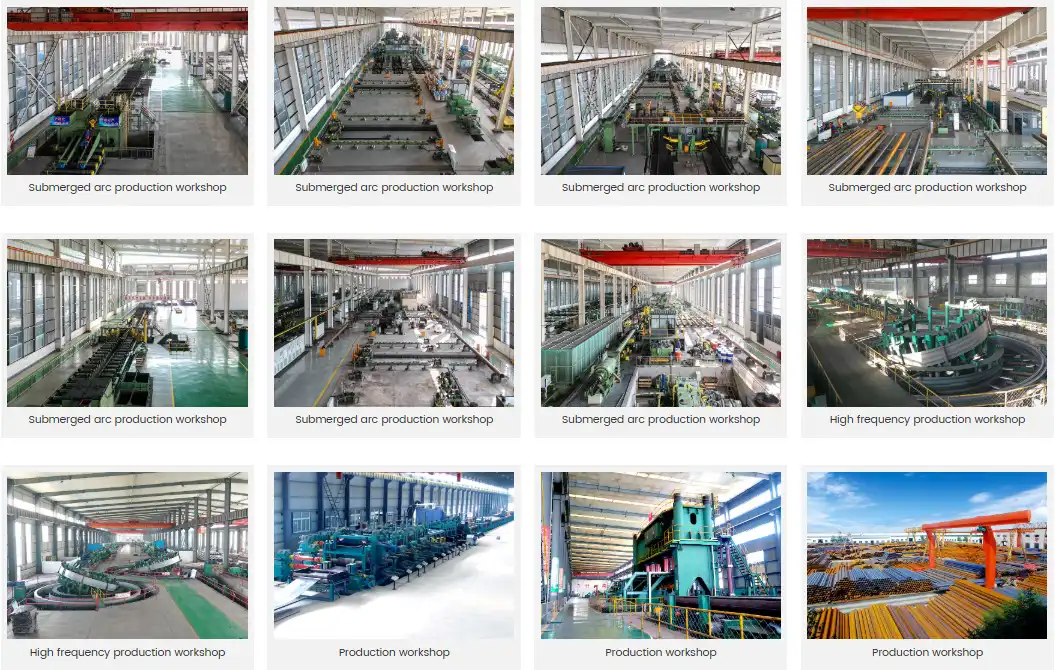
GNEE API 5L Pipeline workshop
FAQ
What is ASTM A333 material?
ASTM A333 covers nominal (average) wall seamless and welded carbon and alloy steel pipe intended for use at low temperatures. Several grades of ferritic steel are included.
What is API 5L X52?
API 5L X52 is a steel grade of API 5L, which specifies the manufacture of two product grades (PSL1 and PSL2) line pipes. X52 line pipes can be made seamless or welded and are widely used as pipelines for oil and natural gas transportation.