What is 15Mo3 material?
15Mo3 is a steel pipe specified in the DIN17175 standard. It is a small-diameter carbon-molybdenum steel pipe for boilers and superheaters, classified as a pearlitic heat-resistant steel. Its chemical composition is simple but includes molybdenum, which allows it to maintain the same processability as carbon steel while offering superior heat resistance. Due to its excellent performance and low cost, it has been widely adopted worldwide. However, this steel tends to graphitize during long-term operation at high temperatures, so its operating temperature should be controlled below 510°C. During smelting, the addition of AI (aluminum) should be limited to control and delay the graphitization process. This steel pipe is mainly used in low-temperature superheaters and low-temperature reheaters, with a operating wall temperature below 510°C. Its chemical composition is as follows: C: 0.12-0.20, Si: 0.10-0.35, Mn: 0.40-0.80, S ≤ 0.035, P ≤ 0.035, Mo: 0.25-0.35. The strength levels in the normalized condition are σs ≥ 270-285 MPa and ob (or Rm (if referring to ultimate tensile strength, commonly denoted as Rm in international standards)) ≥ 450-600 MPa, with a plasticity (or elongation (if 8 here refers to elongation percentage after fracture, commonly denoted as A or elongation in standards)) of 8 (if it is elongation value, unit % is needed, here kept as original) ≥ 22 (if it's elongation percentage, unit % is implied).
What is DIN 15Mo3 equivalent to?
DIN 17155 15Mo3 steel is mainly used for boilers and pressure vessels with elevated temperatures which is equivalent to EN10028 16Mo3 and UNI5869 15Mo3, 15D3 (NFA 36205 ) and ASTM A204Gr.
DIN 17175 15Mo3 V.S DIN 17175 ST35.8
| Comparison Item | DIN 17175 15Mo3 | DIN 17175 ST35.8 |
|---|---|---|
| Steel Type | Carbon-molybdenum steel | Carbon steel |
| Main Alloying Elements | Contains molybdenum (Mo: 0.25 - 0.35) | Primarily carbon, with lower alloy content |
| Heat Resistance | Better heat resistance due to the addition of molybdenum | Relatively lower heat resistance |
| Typical Applications | Used in applications requiring higher heat resistance, such as some parts of boilers and superheaters operating at elevated temperatures | Suitable for general boiler tube applications with relatively lower temperature and pressure requirements |
| Mechanical Properties | Generally has higher strength and better high-temperature performance | Strength and other mechanical properties are relatively lower compared to 15Mo3 |
| Cost | Relatively higher due to the addition of molybdenum | Lower cost |
Chemical composition of DIN 17175 15Mo3
| Standard:DIN 17175 | grade | Chemical composition | |||||
| C | Si | Mn | P,S | Cr | Mo | ||
| 15mo3 | 0.12-0.20 | 0.10-0.35 | 0.40-0.80 | ≤0.030 | / | 0.25-0.35 | |
Mechanical property of DIN 17175 15Mo3
| Standard | grade | Tensile Strength(MPa) | Yield Strength(MPa) | Elongation(%) |
| DIN 17175 | 15mo3 | 450-600 | ≥270 | ≥20 |
Heat treatment temperature of DIN 17175 15Mo3 Seamless Steel Tubes
| Steel Grade | Thermal processing ℃ | Normalizing℃ | Tempering | ||
| Grade | Material number | Quenching temperature ℃ | Tempering temperature ℃ | ||
| 15mo3 | 1.5415 | 1100 to 850°C | 910-940 | - | - |
Test and inspection

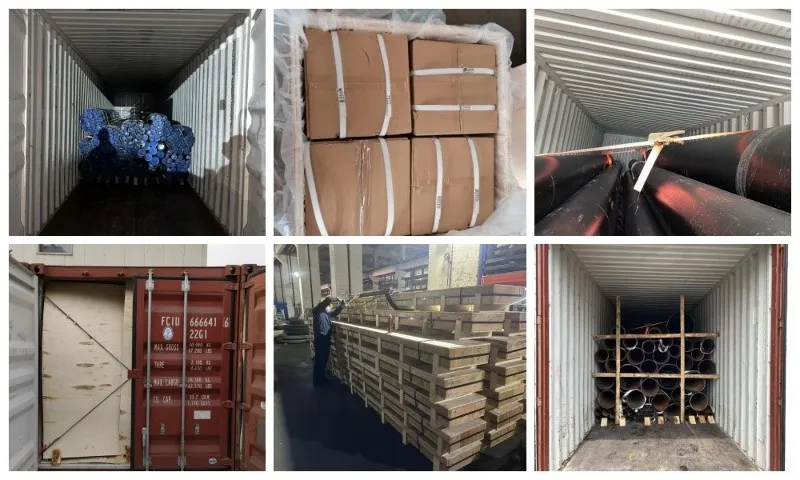
Packaging and shipping