


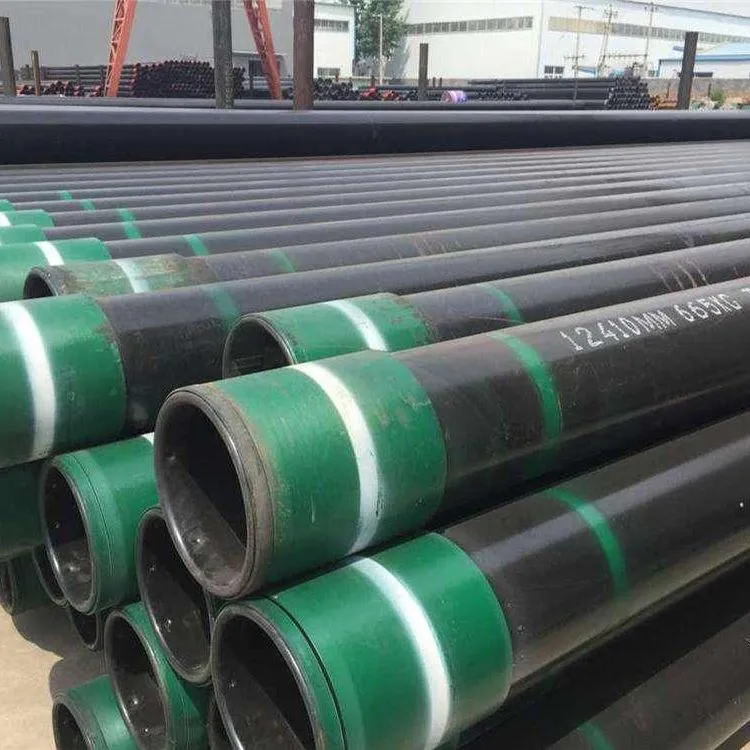
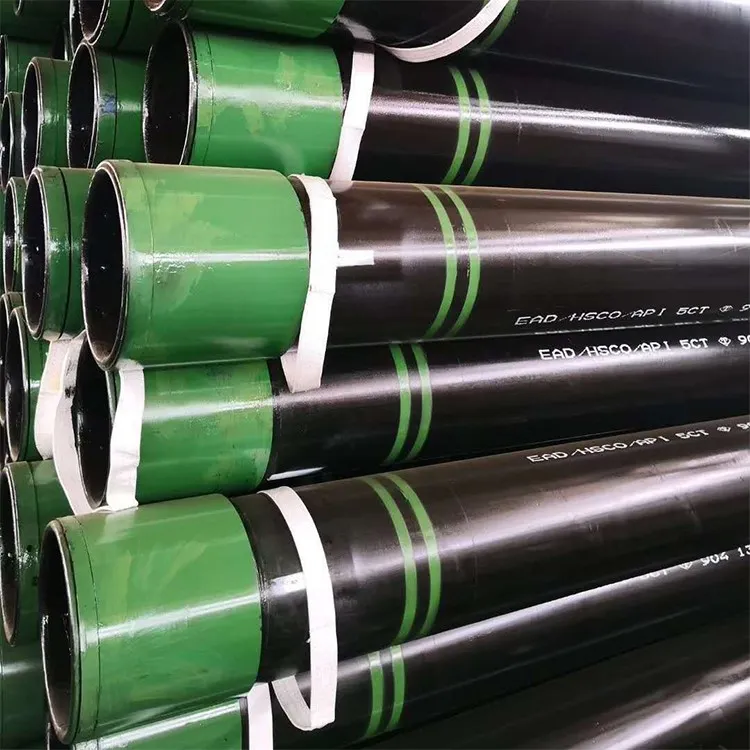
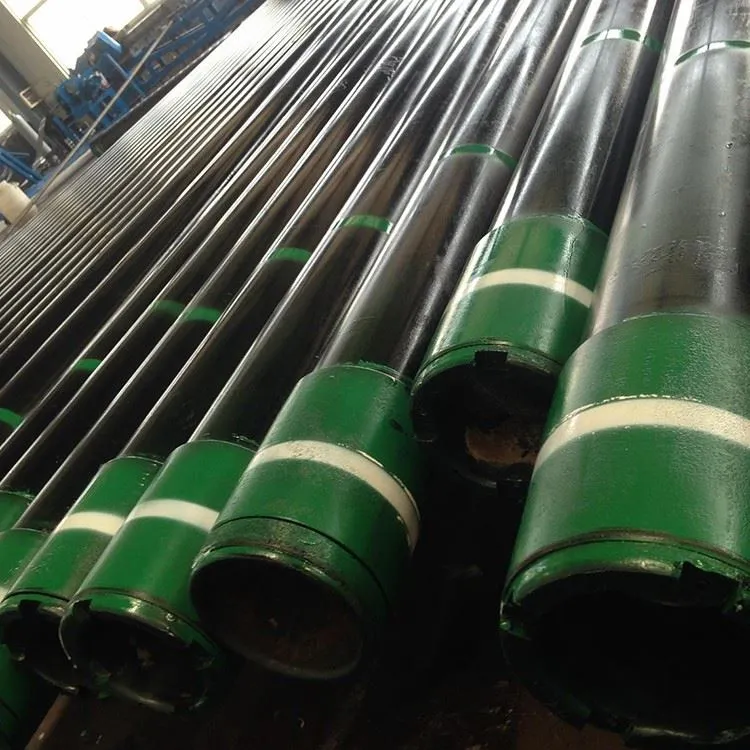
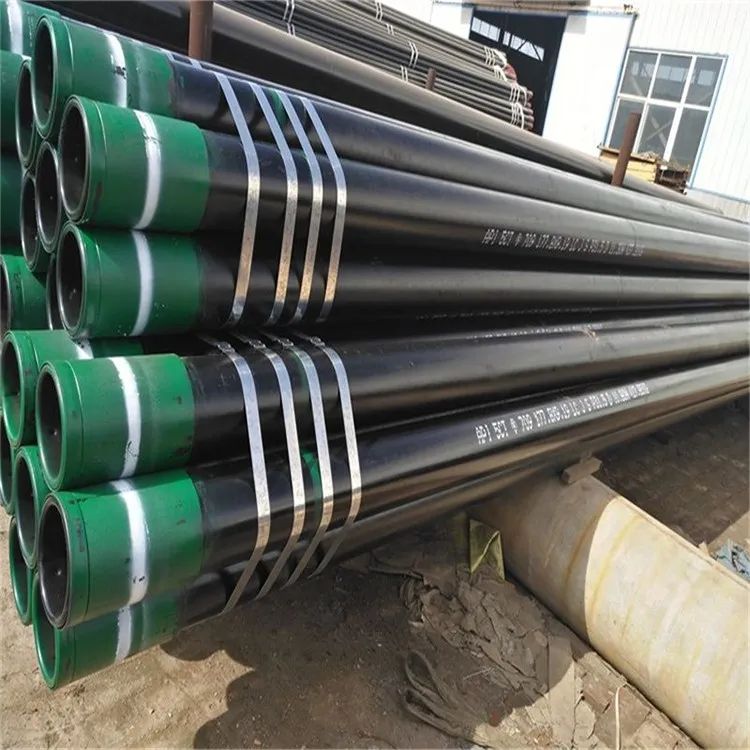
API 5CT Grade H40 OCTG Tubing is the most basic and lowest-strength steel grade within the oil drilling and production industry. It complies with the API Spec 5CT standard and belongs to the OCTG (Oil Country Tubular Goods) category.
Due to its relatively low strength, H40 tubing is primarily used in shallow wells, low-pressure oil and gas wells, and water wells. It is a highly cost-effective choice for oilfield development, especially in non-corrosive environments where high mechanical performance is not required.
Searching for the most economical tubing for shallow wells? Get a factory-direct quote for API 5CT H40 tubing today.
API 5CT Grade H40 Specification Table
| Item | Description |
| Standard | API Spec 5CT |
| Product Level | PSL1, PSL2, PSL3 |
| End Finish | NUE (Non-Upset End), EUE (External Upset End), IJ (Integral Joint) |
| Connection Type | NUE Coupling, EUE Coupling, Premium Gas-Tight Connections |
| Process Type | Seamless (SMLS) or Electric Resistance Welded (ERW) |
| Common Outer Diameter (OD) | 1.050" – 4 1/2" |
| Delivery Condition | As Rolled or Normalized |
Chemical Structure and Mechanical Properties
Chemical Structure
Note: API 5CT requirements for H40 chemical composition are relatively flexible; the focus is primarily on mechanical performance.
| Grade | Carbon (C) | Manganese (Mn) | Phosphorus (P) | Sulfur (S) | Silicon (Si) |
| H40 | No mandatory req. | No mandatory req. | ≤ 0.030% | ≤ 0.030% | No mandatory req. |
Mechanical Properties
| Property | Value (Grade H40) |
| Yield Strength | 276 - 552 MPa (40,000 - 80,000 psi) |
| Tensile Strength | ≥ 414 MPa (60,000 psi) |
| Elongation | Calculated based on formula (typically > 15-20%) |
| Hardness | No mandatory maximum hardness requirement |
pecification & Size of API 5CT H40 Tubing
Common API standard sizes (Selection):
| Nominal OD (in) | Nominal OD (mm) | Wall Thickness (mm) | Grade | Connection |
| 1.050" | 26.67 | 2.87 - 3.91 | H40 | NUE / EUE |
| 1.315" | 33.40 | 3.38 - 4.55 | H40 | NUE / EUE |
| 1.900" | 48.26 | 3.68 - 5.08 | H40 | NUE / EUE |
| 2 3/8" | 60.33 | 4.24 - 5.54 | H40 | NUE / EUE |
| 2 7/8" | 73.02 | 5.51 - 7.82 | H40 | NUE / EUE |
| 3 1/2" | 88.90 | 5.49 - 9.52 | H40 | NUE / EUE |
API 5CT H40 Tubing Application
Shallow Well Development: Since pressure is low, H40 is sufficient to support the weight of the string.
Water and Injection Wells: Used for agricultural irrigation and industrial water well pumping.
Coal Bed Methane (CBM): Often low pressure; H40 is a highly economical solution.
Old Well Remediation: Used as a liner in non-load-bearing sections for repair.
Non-Sour Environments: Suitable for conventional wells without H2S or CO2 corrosion.
API 5CT H40 OCTG Tubing Manufacturing Process
Raw Material Preparation: Selecting compliant steel billets (for SMLS) or hot-rolled strips (for ERW).
Forming Process:
Seamless (SMLS): Billet heating → Piercing → Rolling → Sizing.
Electric Resistance Welded (ERW): Strip cold-bending → High-frequency induction welding → Weld heat treatment.
Heat Treatment (Optional): H40 is usually delivered in the As-Rolled or Normalized condition.
Upsetting: Upon order request, pipe ends are hot-upset to increase thickness (for EUE connections).
Threading: Machining threads on CNC lathes (NUE or EUE).
Coating and Marking: External spraying of anti-rust paint and stenciling of the API logo, grade, size, and heat number.
Final Quality Control: A final comprehensive inspection before warehousing.
Test Requirements
To ensure downhole safety, H40 tubing must undergo a series of rigorous tests:
Hydrostatic Test: 100% individual pipe testing to ensure no leakage under simulated downhole pressures.
Flattening Test: Primarily for ERW pipes to verify the quality of the weld seam.
Tensile Test: Verification that yield strength, tensile strength, and elongation meet standards.
Dimensional Inspection: Verification of OD, ID, wall thickness, length, and straightness.
Threading Inspection: Inspection of thread form, lead, taper, etc., to ensure seal integrity.
Non-Destructive Testing (NDT): Usually required for PSL2 and higher levels (Ultrasonic or Electromagnetic inspection).
API 5CT H40 oil special pipe Factory

API 5CT H40 OCTG Pipe Hot Rolled Test Equipments

API 5CT H40 Petroleum Steel Pipe Certificate

FAQ
What materials are used in API 5CT?
API 5CT is the international standard for OCTG (Oil Country Tubular Goods), specifically Casing and Tubing used in oil and gas wells. The "materials" used are carbon and alloy steels, which are classified into different Grades and Groups based on their chemical composition, strength, and intended environment.
| Grade Group | Most Common Grades | Characteristics | Common Application |
| Group 1 | J55, K55, N80 | Economic, Carbon steel | Shallow to medium wells |
| Group 2 | L80, C90, T95 | Restricted hardness | Sour service (
H2SH2S environments) |
| Group 3 | P110 | High strength | Deep, high-pressure wells |
| Group 4 | Q125 | Ultra-high strength | Critical, extreme pressure wells |
What is the difference between API 5CT and API 5L?
The simplest way to distinguish them is by their location and direction: API 5CT goes down into the well (Vertical), while API 5L goes across the ground (Horizontal).
| Feature | API 5CT | API 5L |
| Common Name | Casing and Tubing (OCTG) | Line Pipe |
| Direction | Vertical (Downhole) | Horizontal (Cross-country) |
| Grades | J55, K55, N80, L80, P110 | Gr. B, X42, X52, X60, X65, X70 |
| Main Pressure | External (Collapse) | Internal (Burst) |
| Joining Method | Threaded Couplings | Welding (Beveled Ends) |
| Testing Focus | Hardness, Collapse testing | Weld NDT, Hydrostatic testing |
Hot Tags: api 5ct grade h40 octg tubing, China api 5ct grade h40 octg tubing manufacturers, suppliers, factory


