astm a500 vs a572
The A500 quality standard is mainly divided into three grades: A, B, and C. For A500 square and rectangular tubes, the most commonly used grade is A500B. This grade of steel requires good weldability and machinability, and has high requirements for tensile strength and yield strength. Specifically, the tensile strength of A500B should be between 400 and 550 MPa, and the yield strength should not be less than 240 MPa. These properties give A500B good safety and stability in building and structural engineering.
During the production process, A500 square and rectangular tubes require rigorous inspection, including visual inspection, dimensional measurement, and mechanical property testing. Manufacturers need to provide corresponding quality certification documents to ensure that the materials meet the standards. A500 square and rectangular tubes are usually manufactured using hot rolling or cold drawing processes, which ensures that their internal structure is uniform and dense, thereby improving their load-bearing capacity.
The A572 quality standard is relatively complex, mainly divided into several different levels, such as A572 Grade 42, Grade 50, and Grade 55. Grade 50 is the most widely used grade, suitable for high-load structural applications due to its high strength and good weldability. A572 requires a tensile strength between 450 and 620 MPa and a yield strength of no less than 345 MPa, giving it excellent strength and toughness, making it suitable for buildings under harsh conditions such as earthquake and wind resistance.
When producing A572 square and rectangular tubes, in addition to basic physical performance requirements, the chemical composition of the material is also an important consideration. For example, A572 requires a higher proportion of elements such as manganese and silicon, which significantly improve the strength and durability of the steel. Manufacturers of A572 need to establish strict chemical composition testing standards to ensure that each batch of material meets the expected performance indicators.
In practical applications, the choice between A500 and A572 often depends on specific engineering requirements. If the project has low strength requirements and is cost-sensitive, A500B may be a more economical choice. However, in projects that need to withstand large loads or have special environmental requirements, A572 is particularly important. Surface treatment of rectangular tubes is also a crucial factor affecting their service life. Whether it's A500 or A572, surface treatment effectively prevents corrosion and extends the material's lifespan. Common surface treatment methods include hot-dip galvanizing and painting; different methods can be selected based on project requirements.
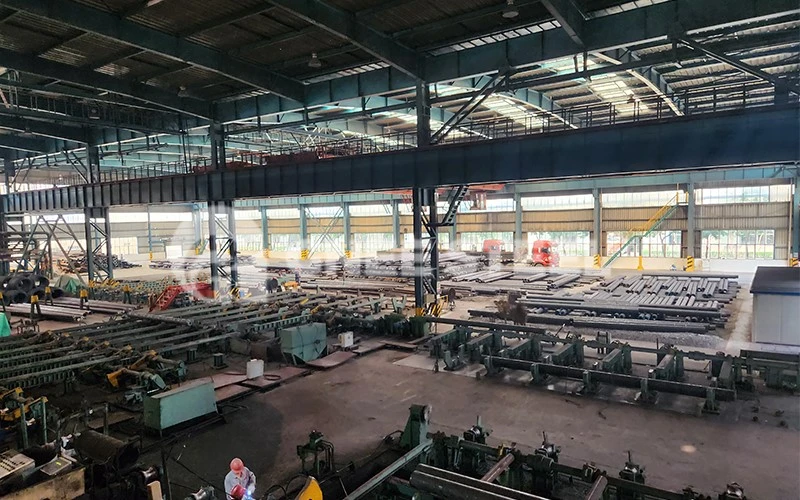
A500 and A572 structural tube factory